Meela
Overview
Meela is an electric driven liquid oxygen pump targeting 3kg/s with a pressure rise of 40Bar with a 5Bar inlet pressure. The goal of LURA's liquid project (Silverback) is to build a rocket capable of reaching the Kármán line, which in our minds is best achieved with e-pumps. Meela is designed to be the step before a launch-ready pump — a non-flight weight, architecture demonstrator with a fully custom, submerged 25kW motor. It's pretty cool. Unfortunately, we didn't manage to test during our Race2Space slot due to a manufacturing issue, but we did get some valuable testing done, and everything pointed towards the design working!
Design & Manufacture
I joined Meela at the end of May 2026 after I had finished my exams for the year. I had spent the biggest chunk of my year working on Gryphon 3, and that had slowed down post exams as everyone recovered — I wanted more.
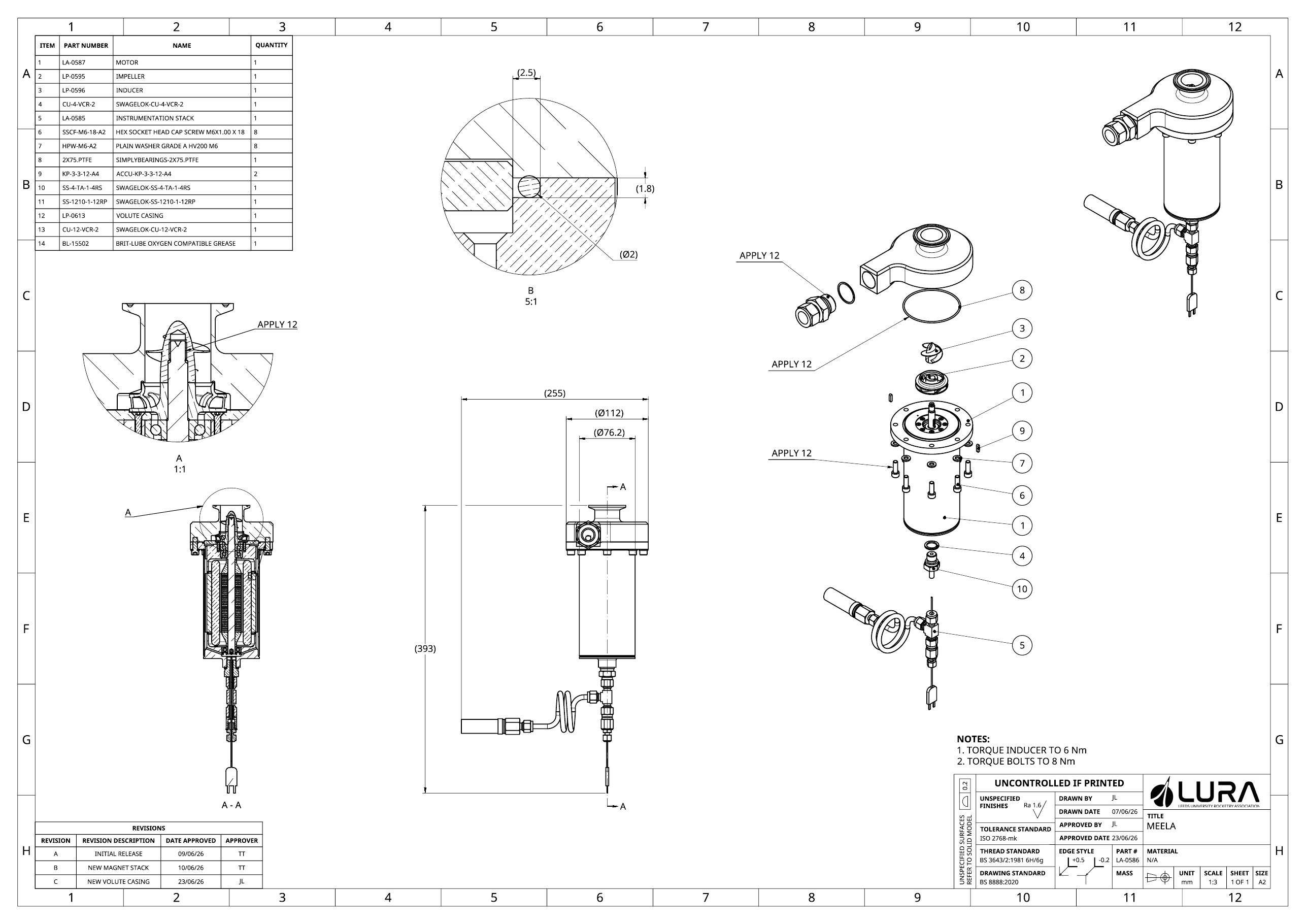
Walking into the project, the largest remaining gap was the mechanical design. Me and a teammate Toby sat down and sprinted to the finish. Within a few days we had done the majority of the details, such as o-ring sizing, torque specs and key sizing all done.
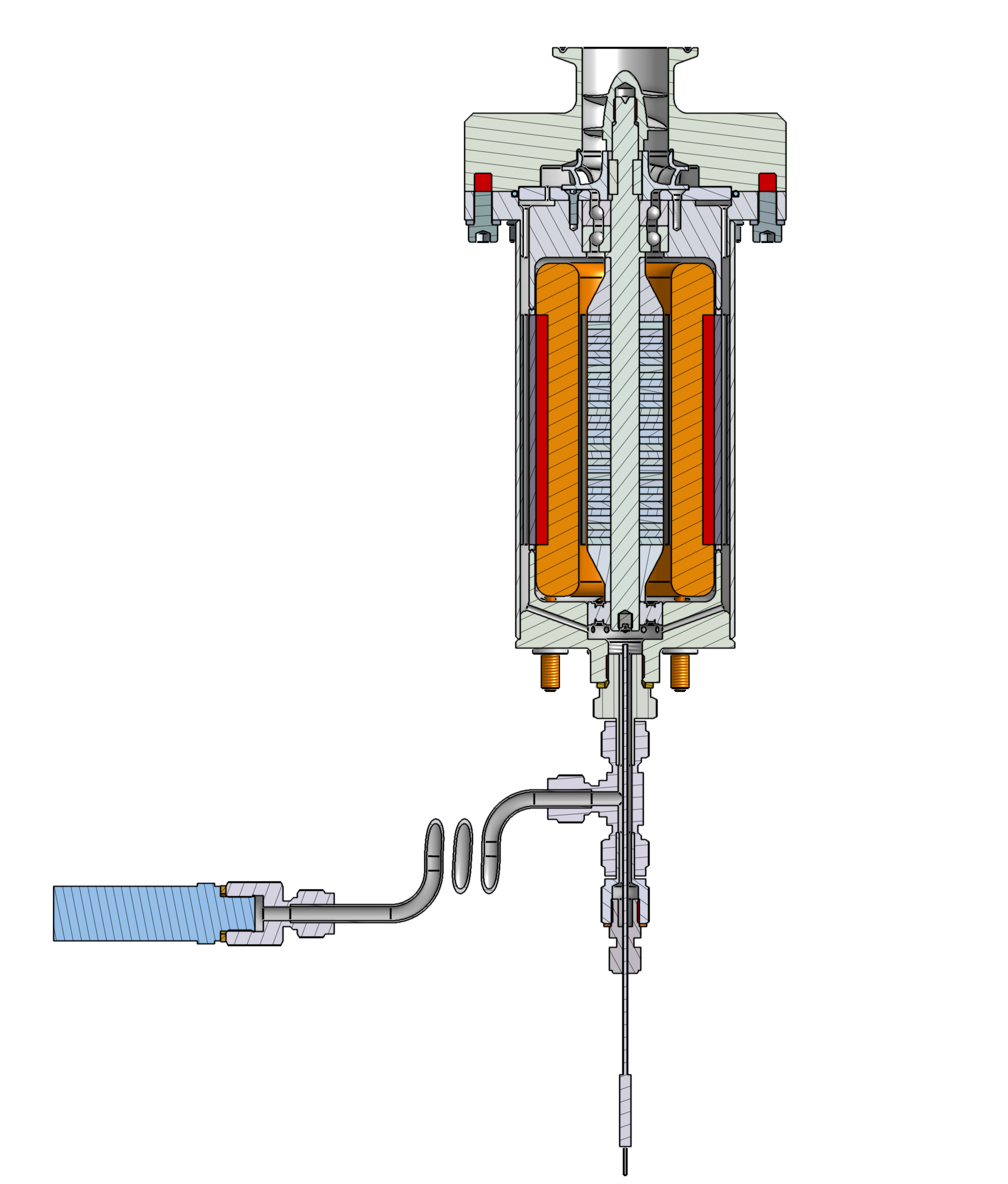
Pump assembly CAD
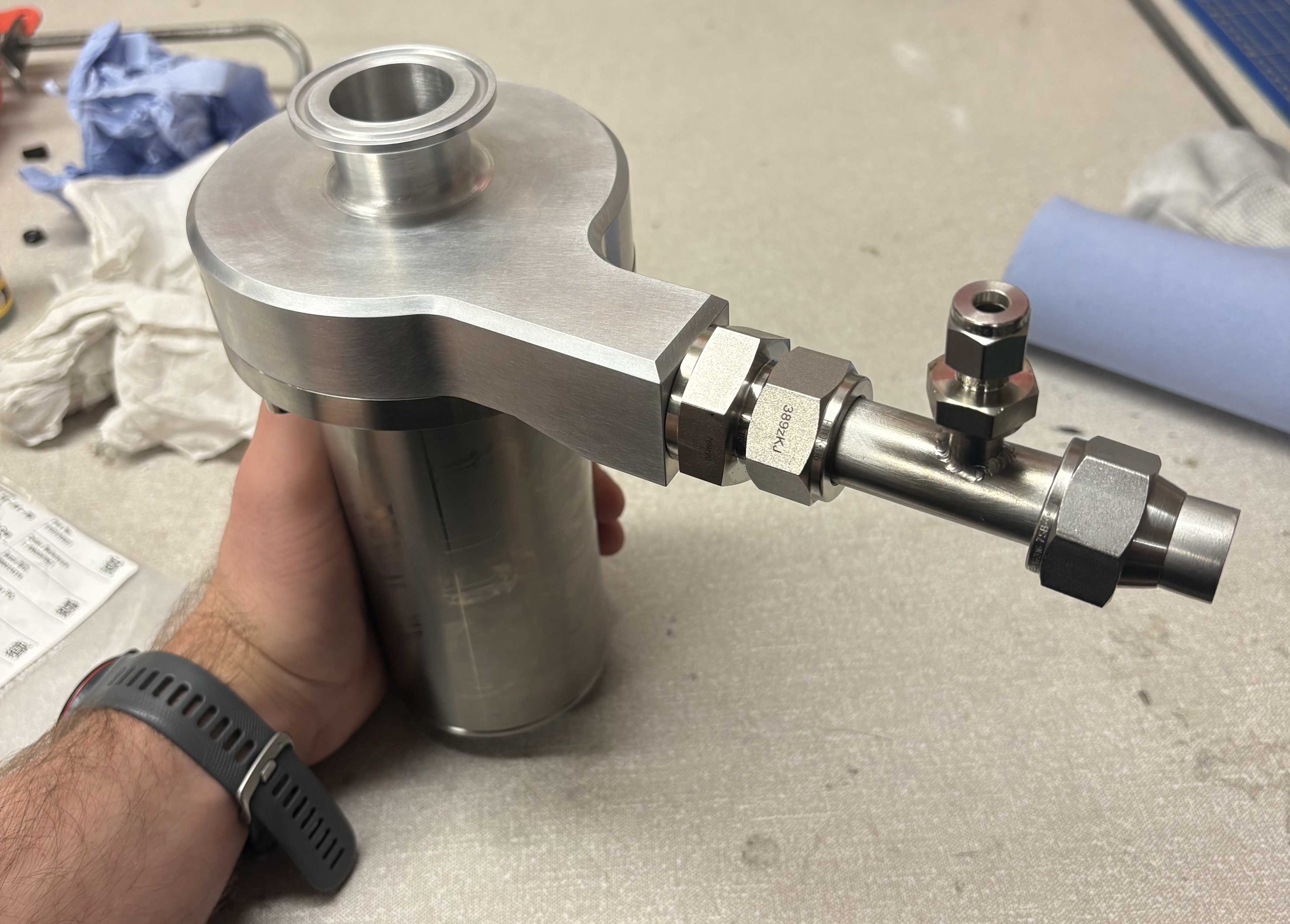
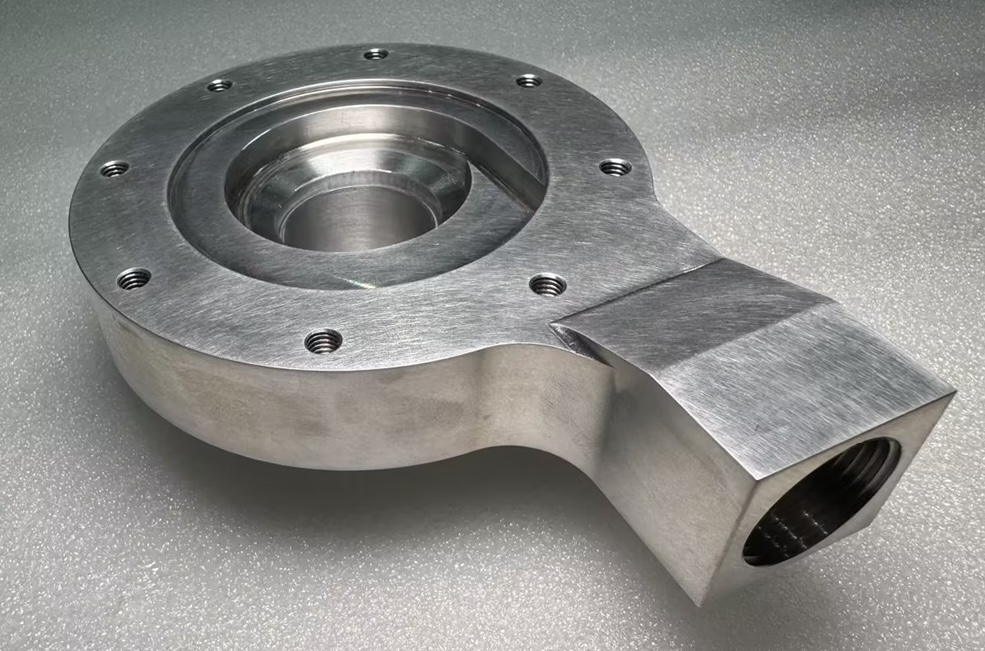
The next challenge was finding suppliers for all of the parts. The timeline of the project left us a very small amount of time and, of course being a student project, with no money! The answer I found was China. Within a week all of the designs were sent away across five different suppliers, except the volute casing. Multiple suppliers told me it would be impossible to machine — I now know that they just meant difficult. I found a supplier in China who was able to machine this part in 3 days, with a 2-day delivery to the UK.
The assembly of Meela was unlike any other project I had worked on. Away from the comfort of swaging tubes, I was getting to grips with epoxy. Choosing to manufacture the motor in-house was an absolute pain and ultimately the reason that we missed our test date, but I learnt so much doing it, and loved the challenge.
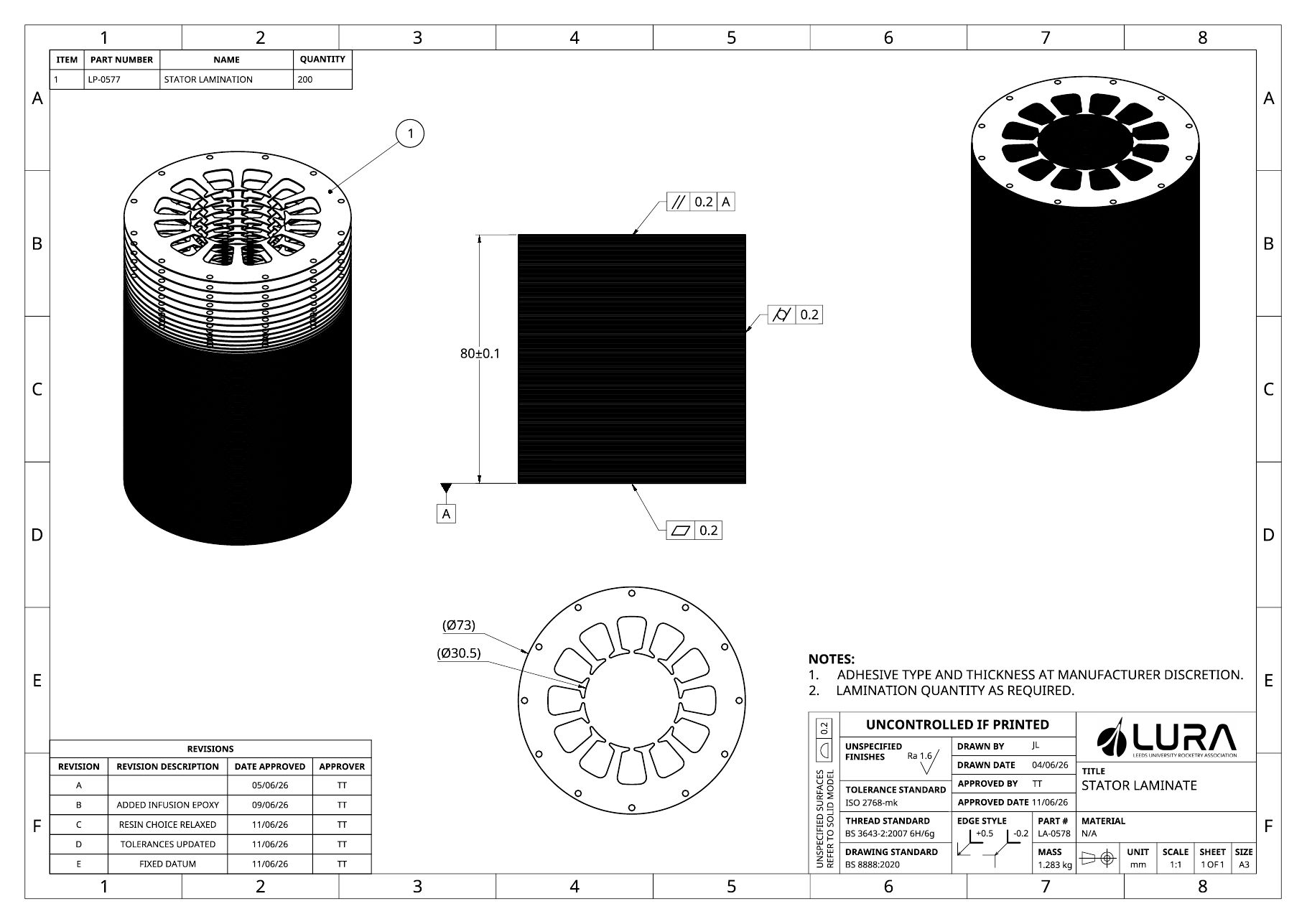
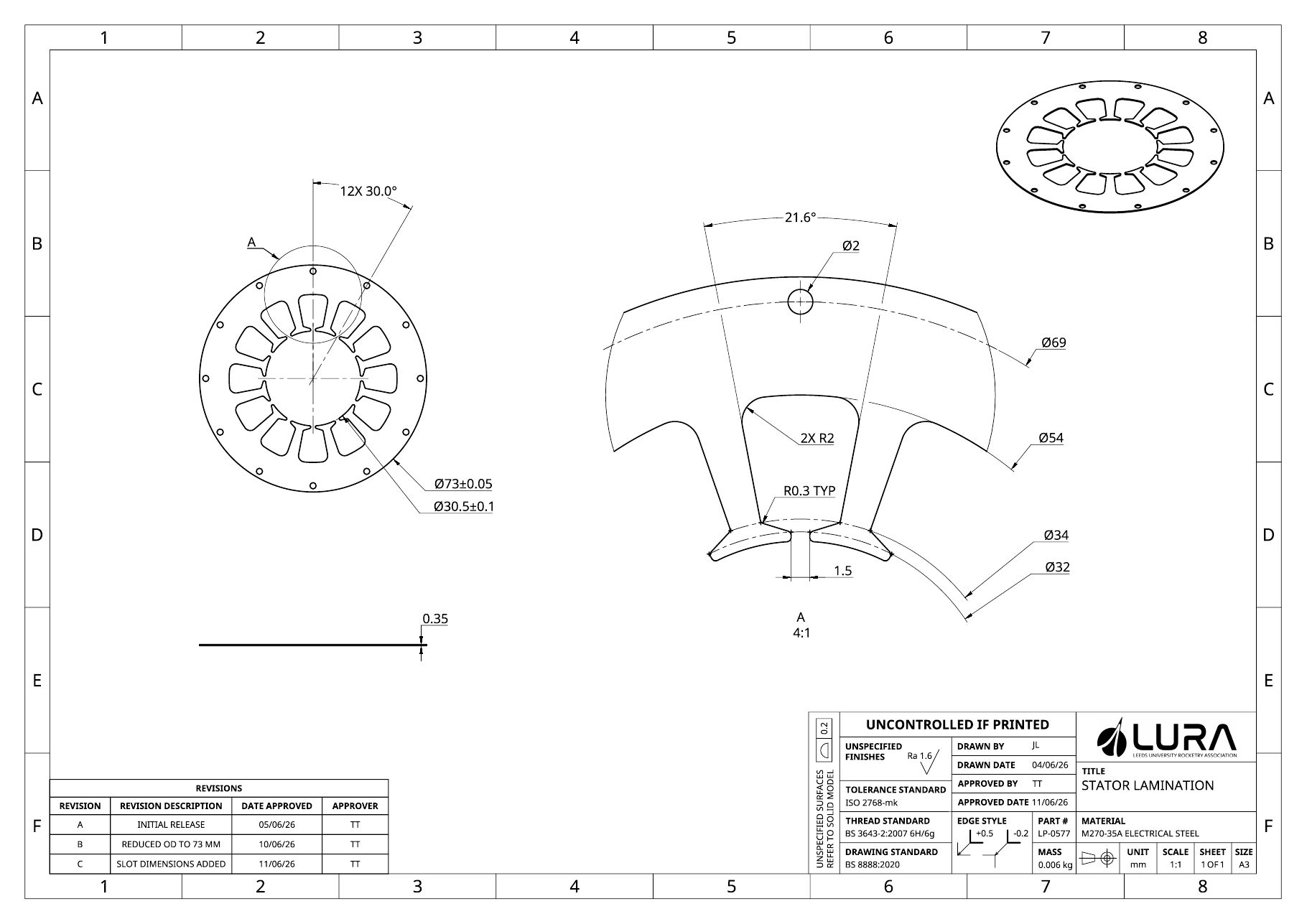
Epoxying together individual stator laminations required careful thought about the jig used. Ideally it would be able to be put in the oven for a quicker cure with better thermal properties, while also applying an even clamping force to maximise the stacking factor.
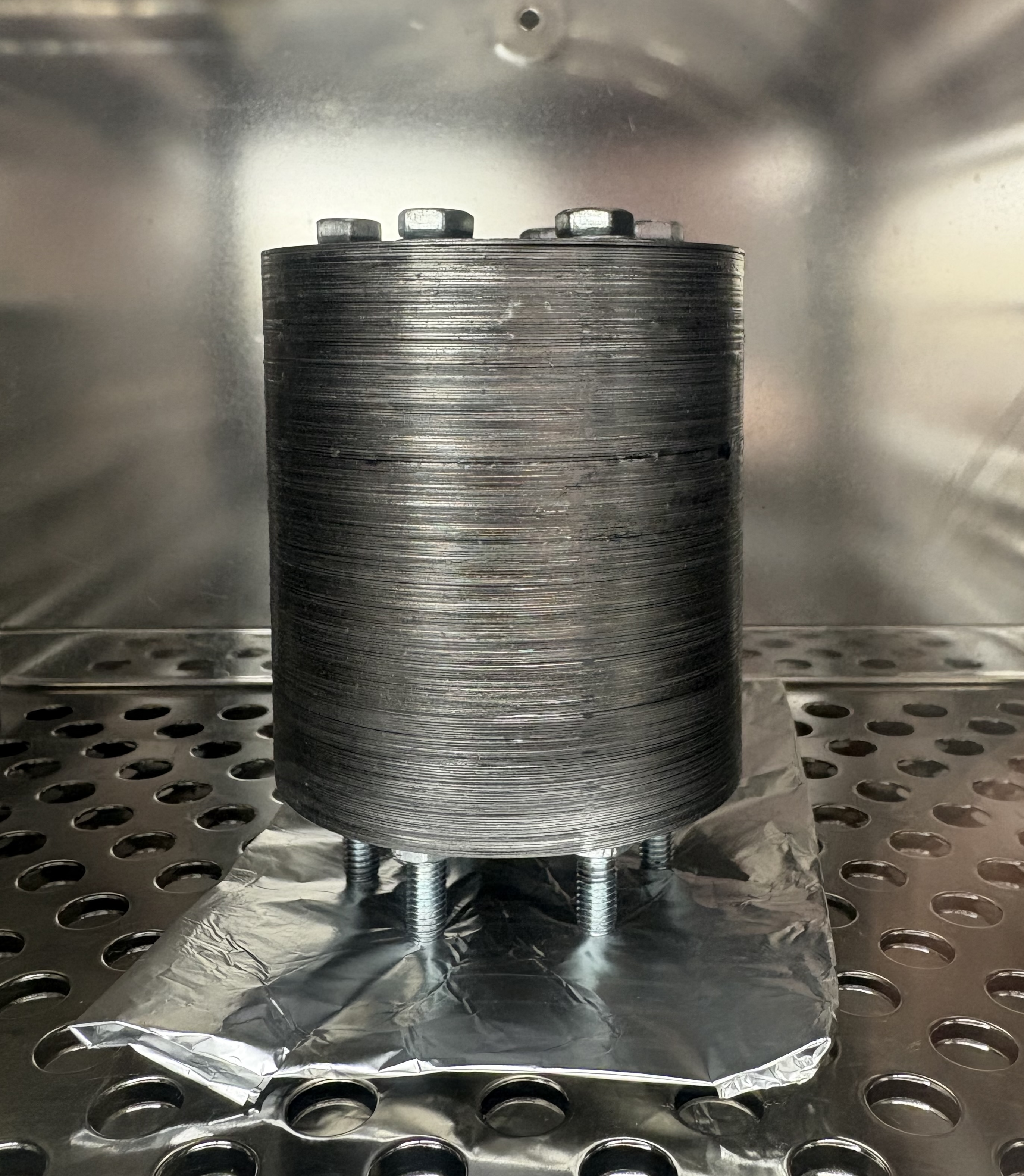
Stator laminations, clamped in the jig
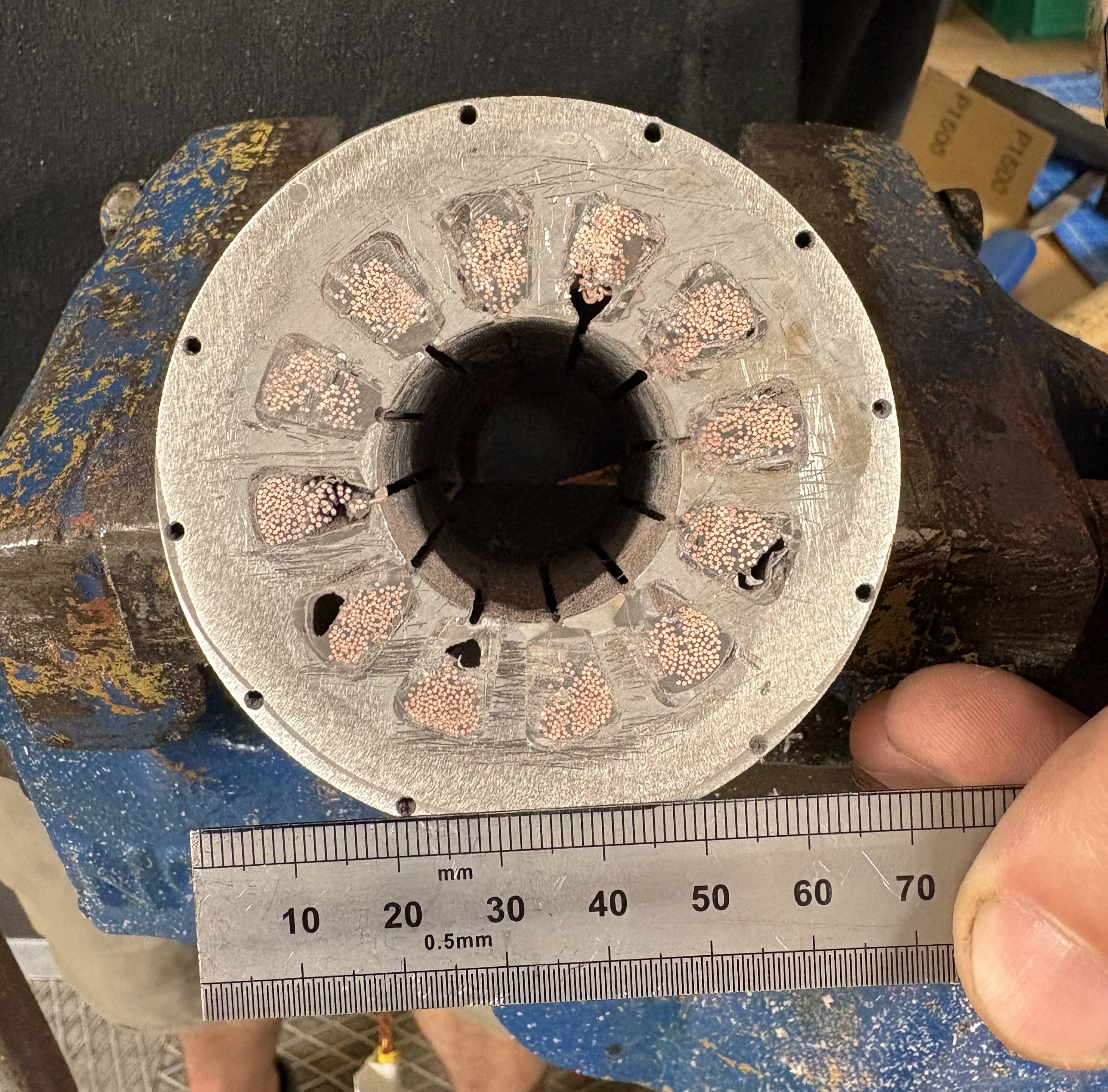
We then had to wind the stator. I didn't do this myself, but I was responsible for calculating the required number of strands, packing factor and current density to achieve our required performance without melting the copper. Heat transfer was an interesting problem. As the motor was submerged in LOX, we had a significant cooling benefit, however, this was coupled with the increased losses from the rotor spinning through a particularly viscous fluid. An orifice in the outlet of the pump allowed us to control the amount of LOX flowing through the stator and thus control the cooling capacity of the system.
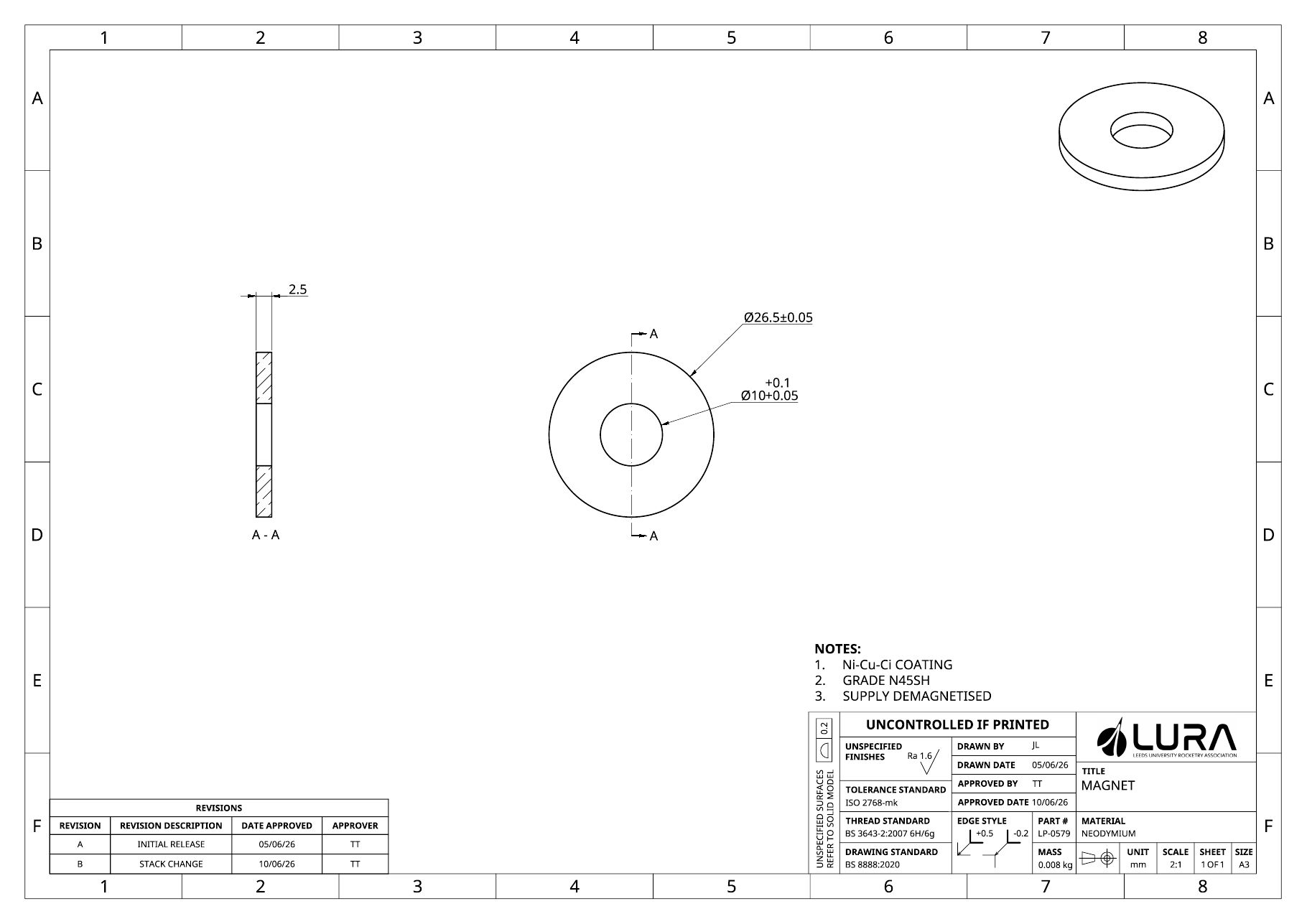
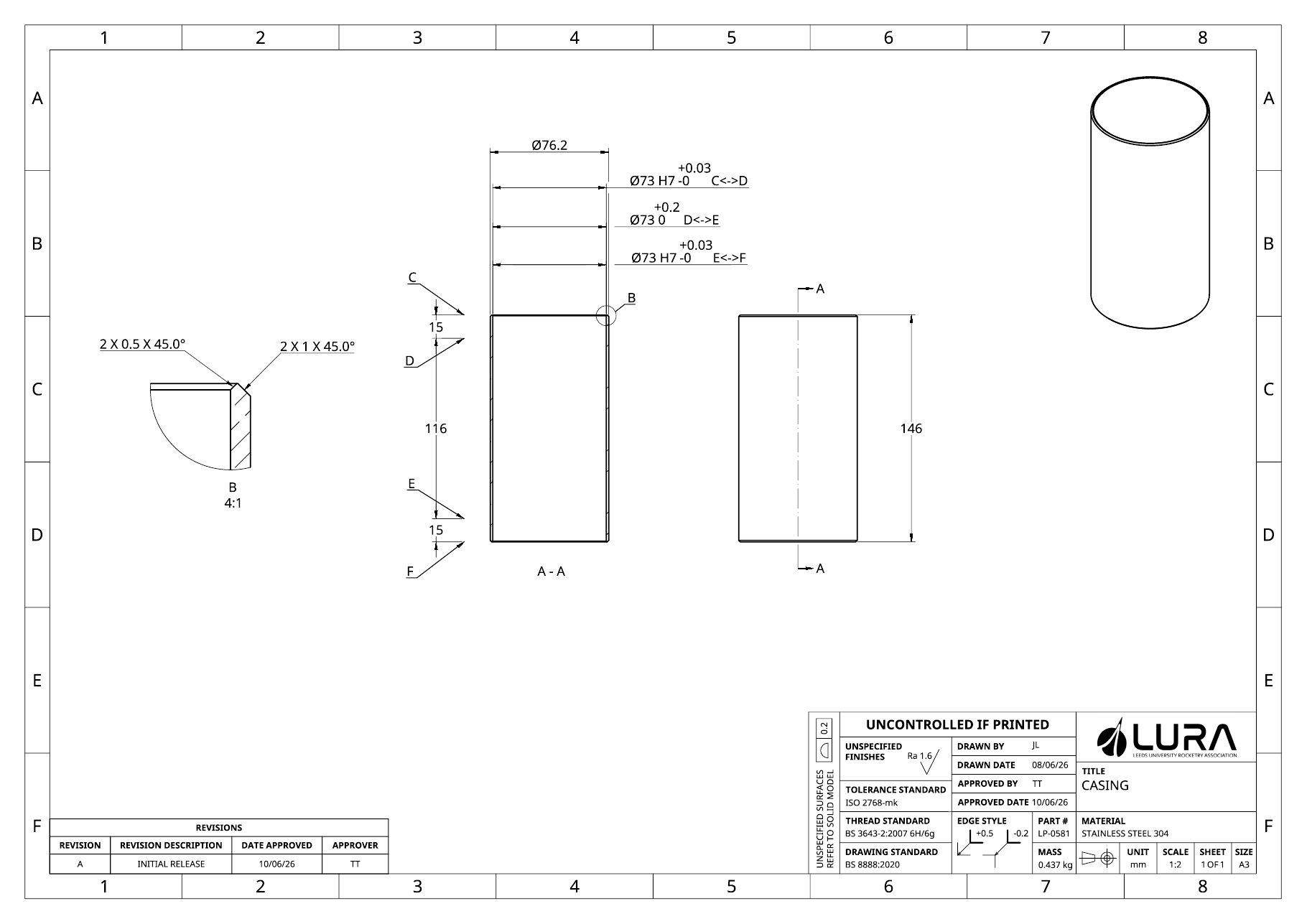
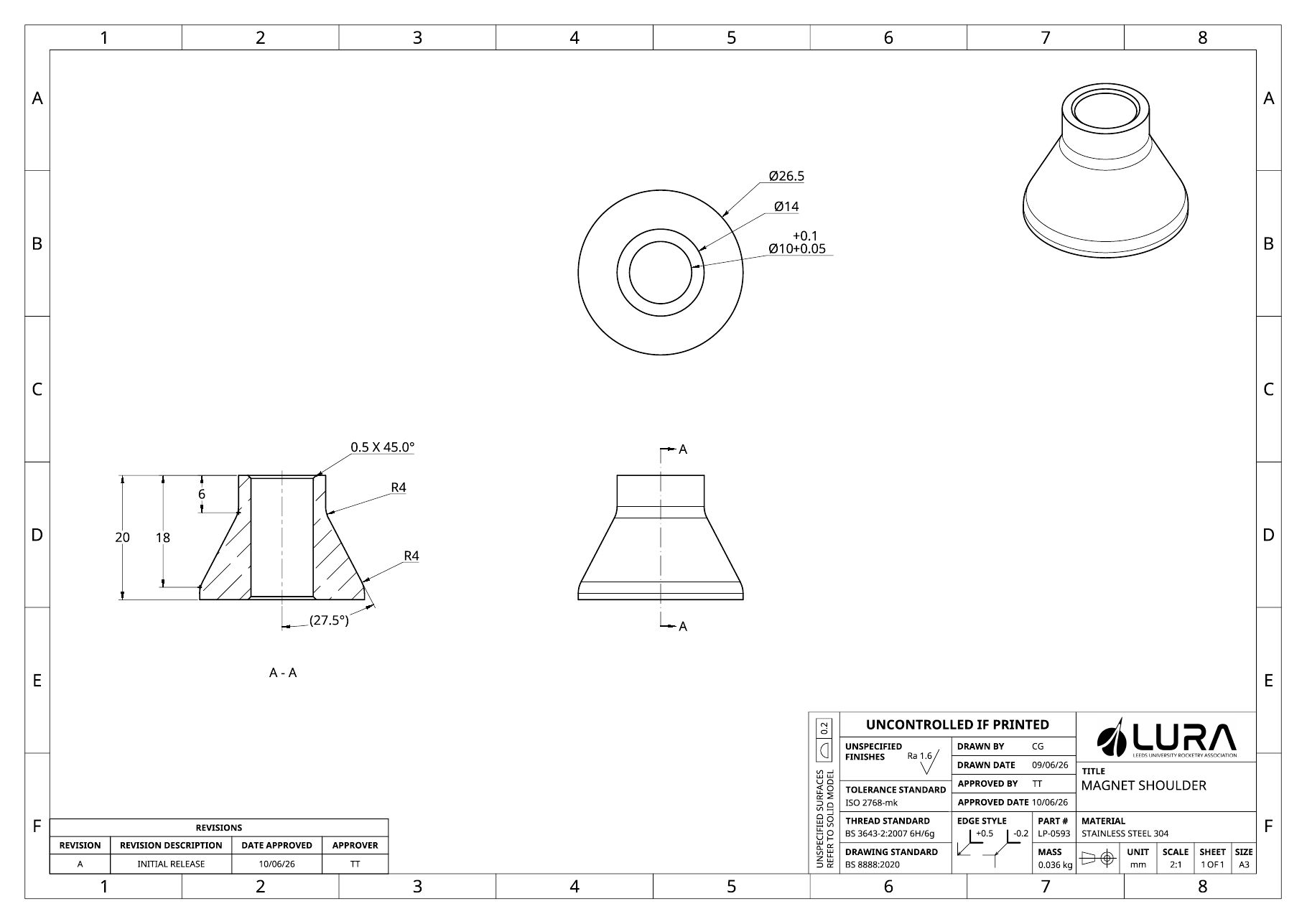
In the manufacturing process of the pump, I spent some time learning how to use a lathe. I manufactured magnet shoulders for the shaft and turned down the stacked laminations to achieve a close fit in the casing, among a few other miscellaneous bits.
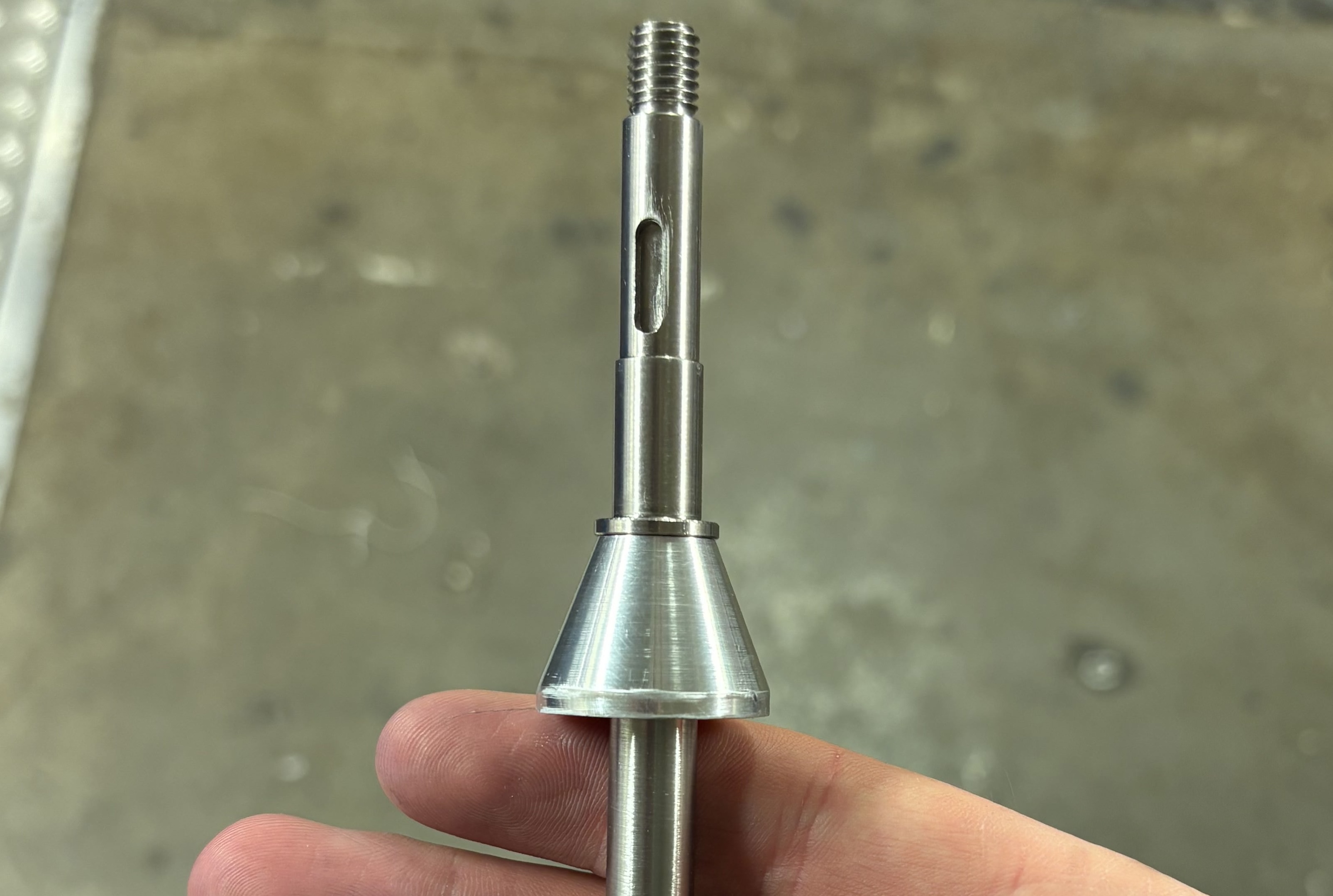
One of the magnet shoulders on the shaft
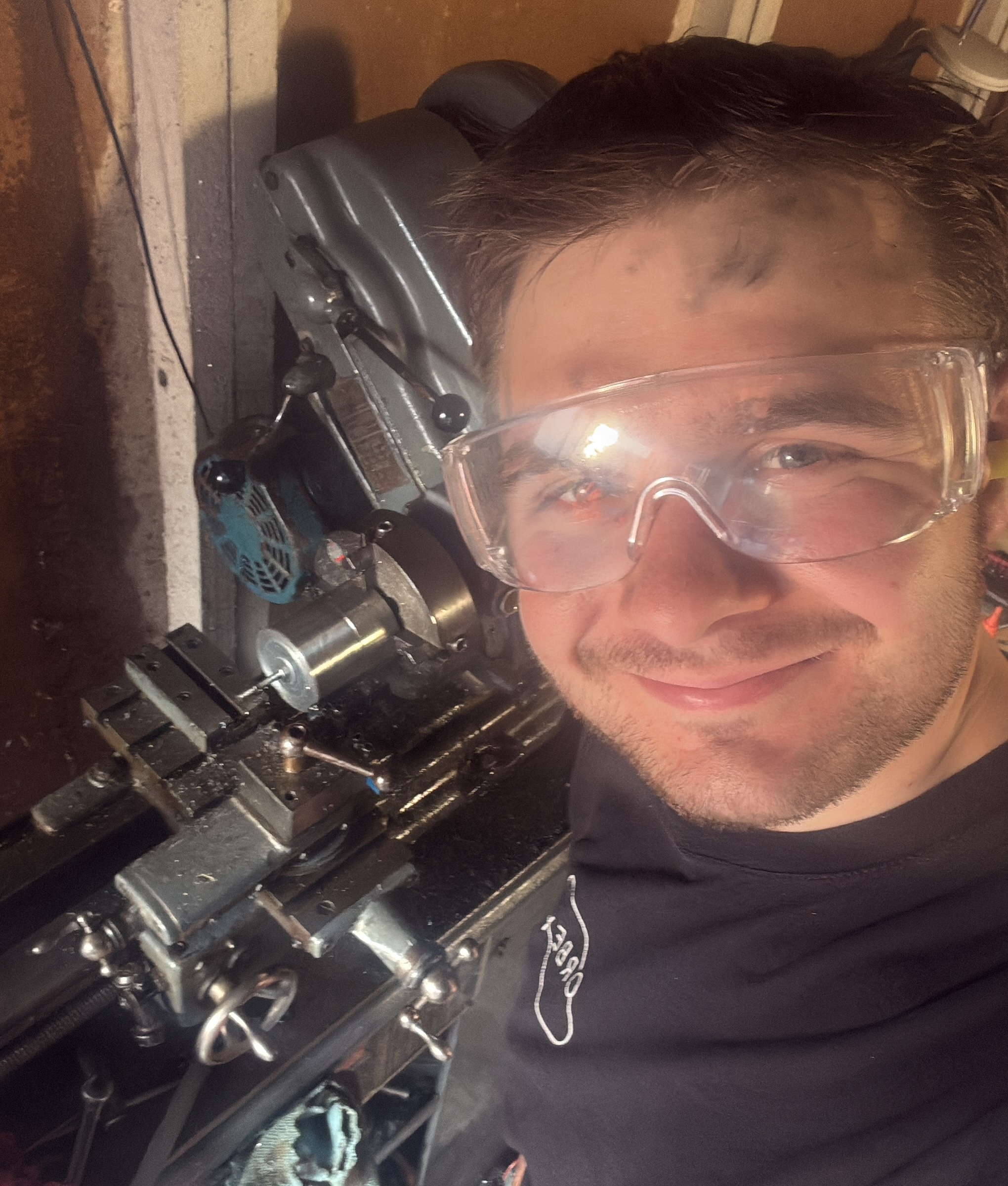
Me turning down the laminations
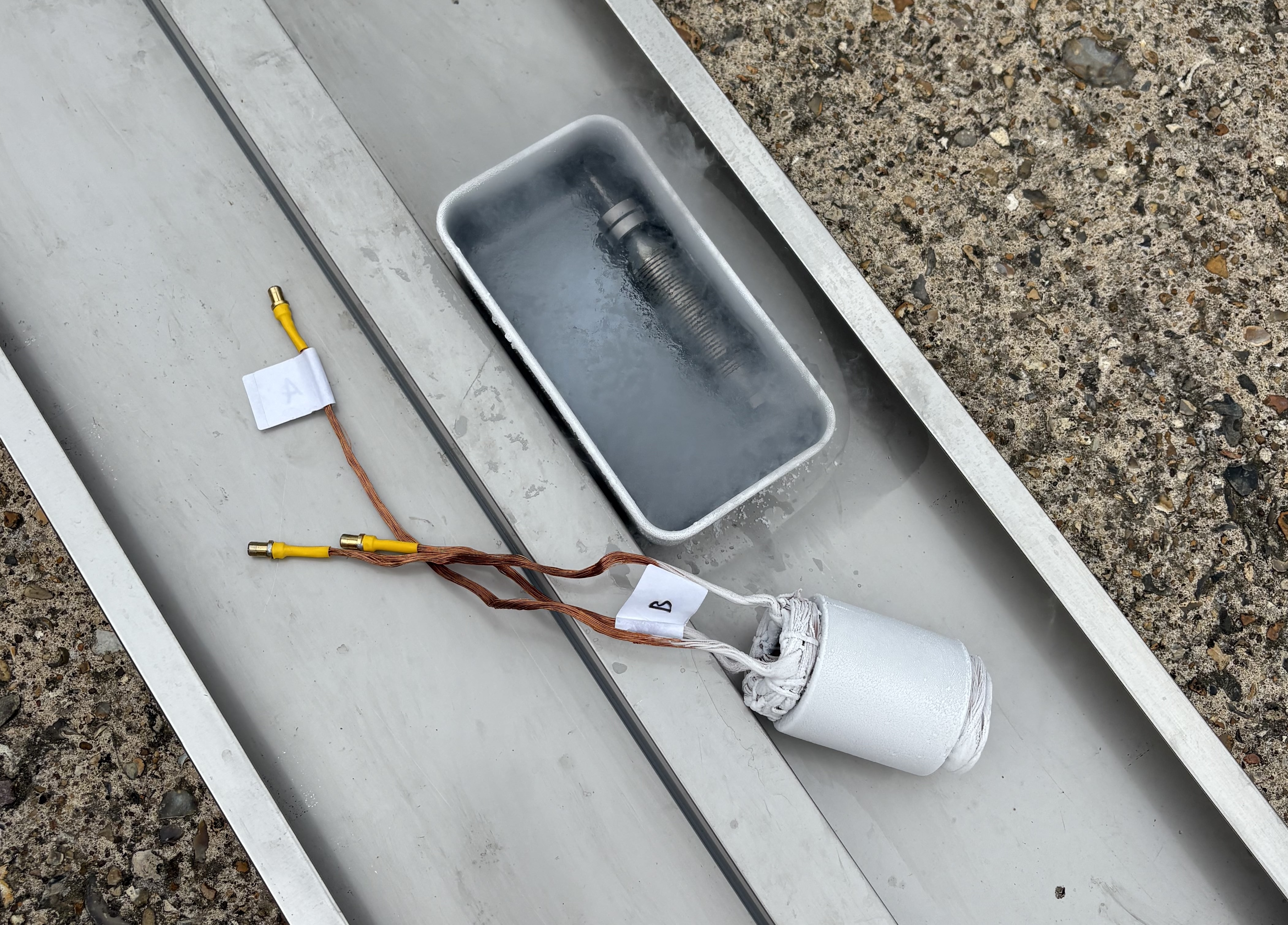
We managed to do some compatibility testing with LOX.
And we did get the rotor spinning to 3000rpm (limited by the rigidity of our improvised setup). This was also done in an early stator where the phases were unbalanced, hence the noise!
Reflection
Above all, this project taught me persistence and creativity. With such a short timeline, we were able to make a huge amount of progress and solve countless problems that I have never seen before. Persistence in chasing suppliers, finding exactly what is pushing up lead time, learning new skills to see the project over the line. Creativity in approaching brand new problems and solving them with no money or time.
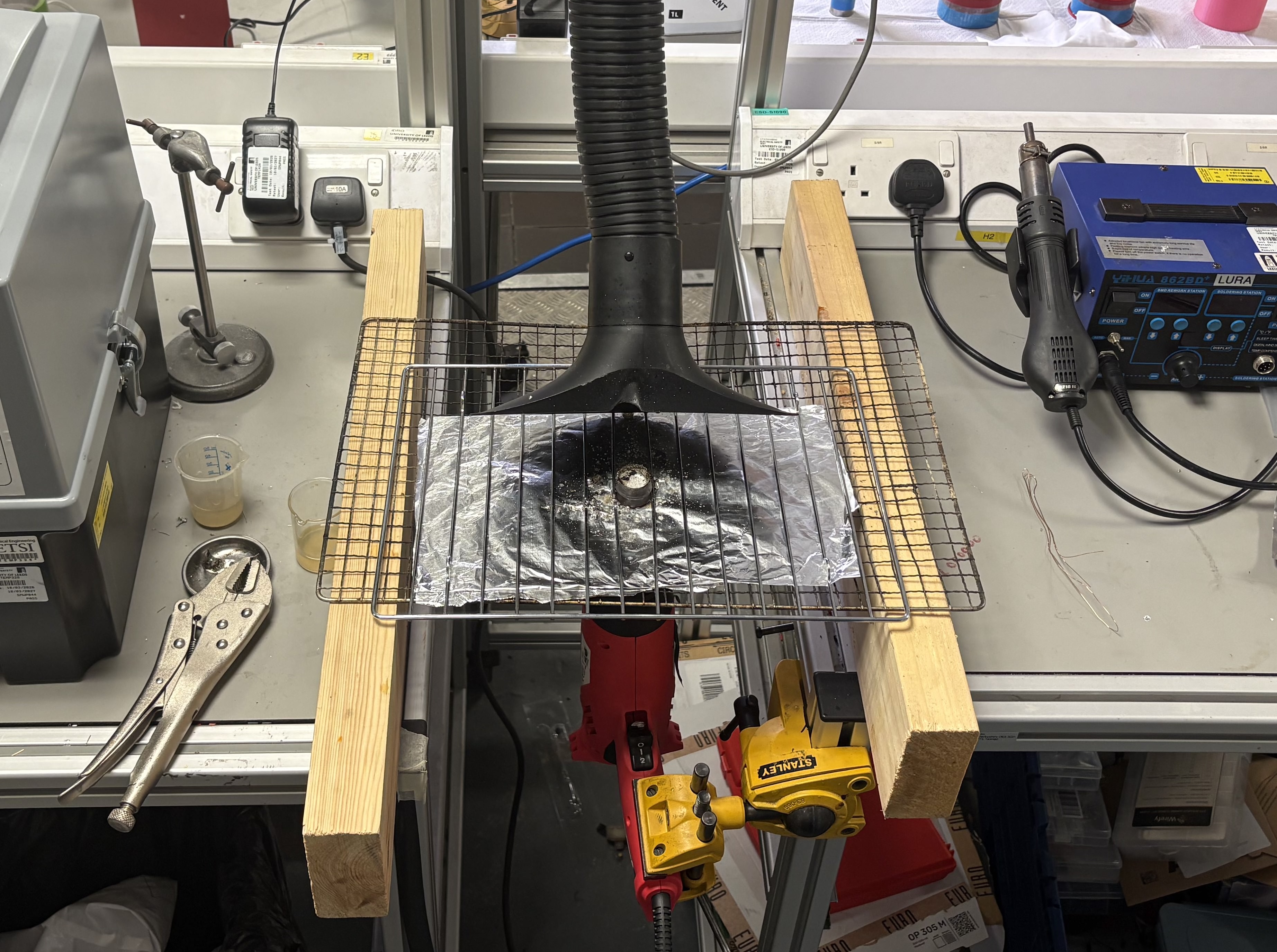
One evening we needed to make a solder pot... we used what we had
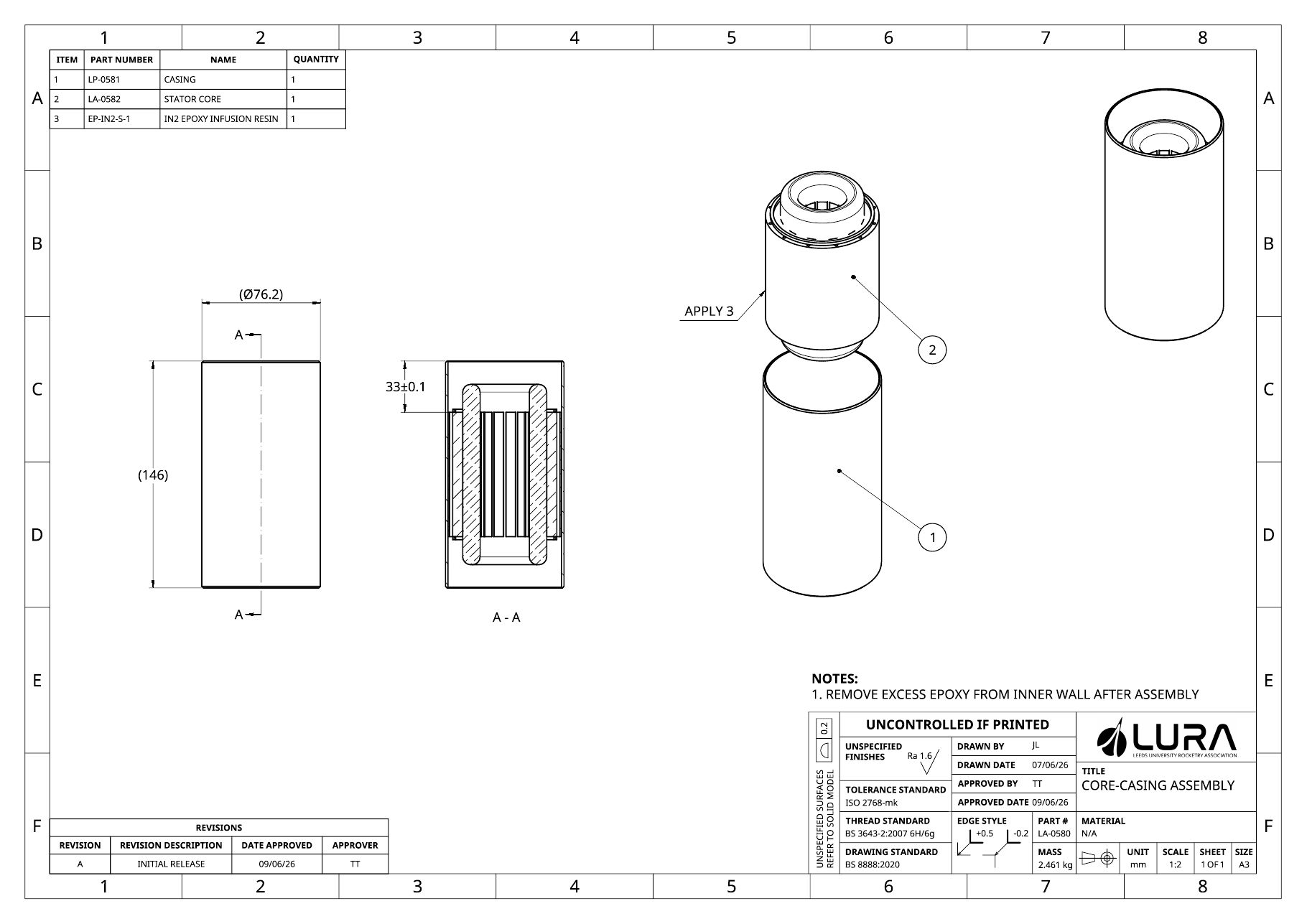
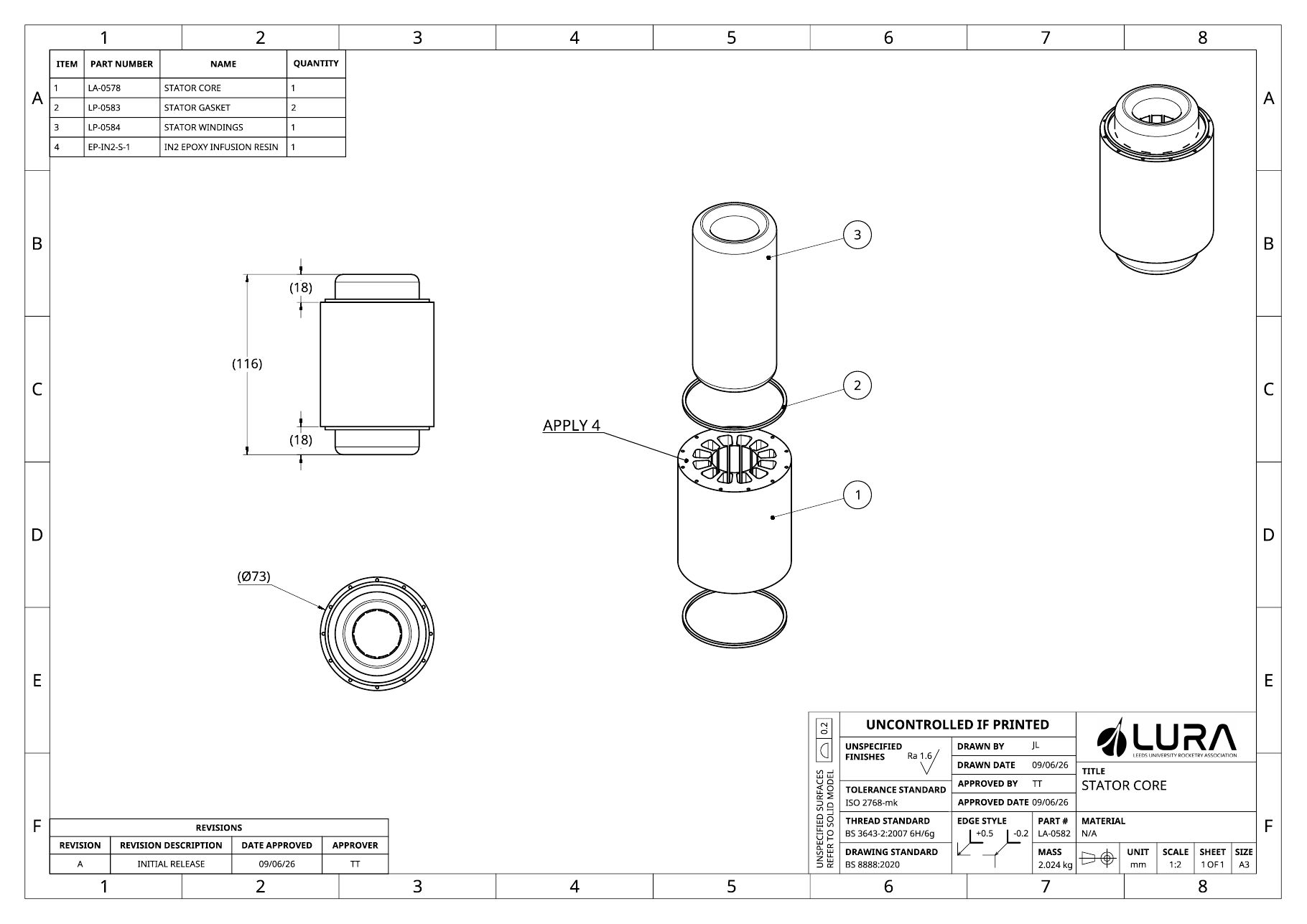
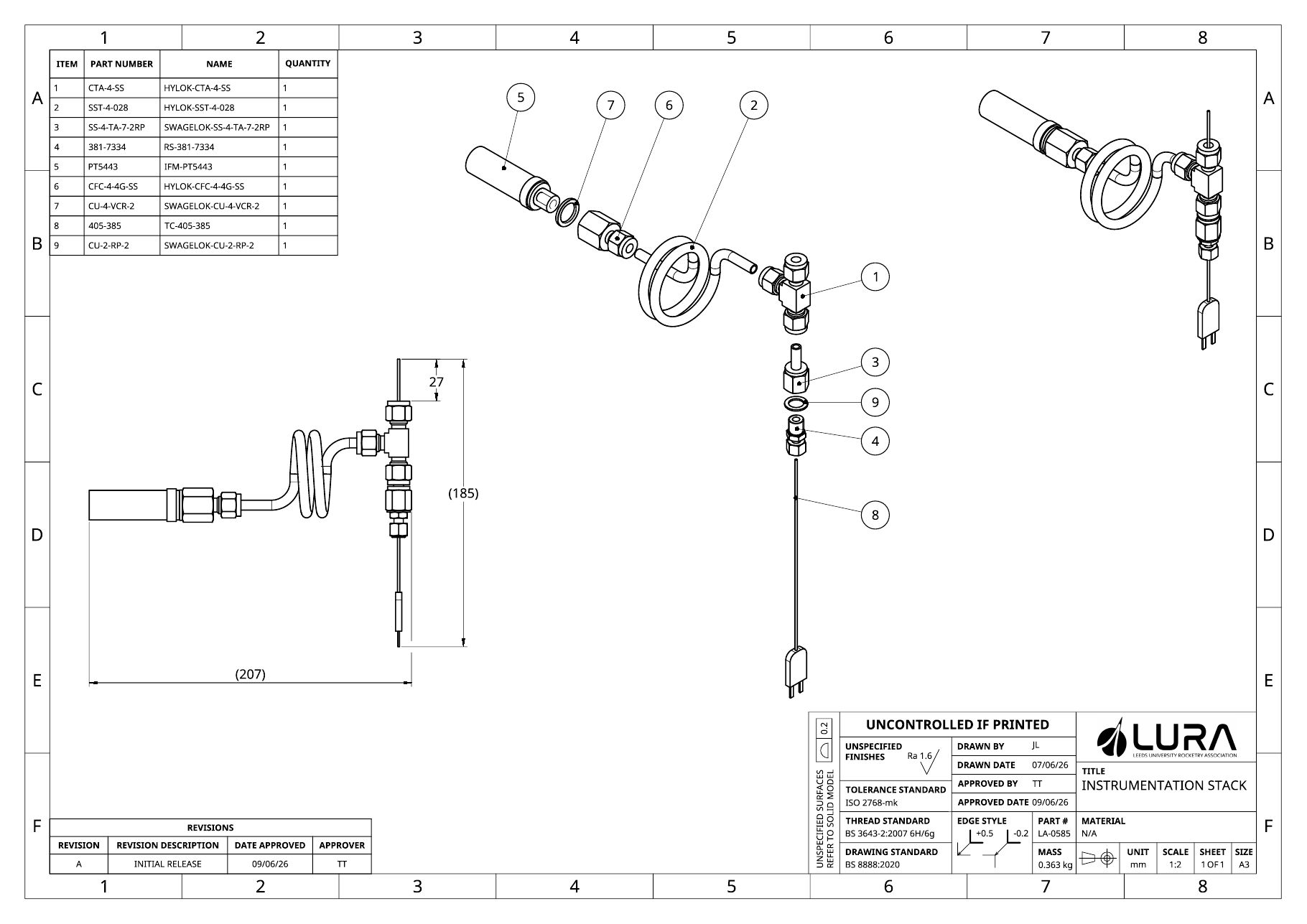
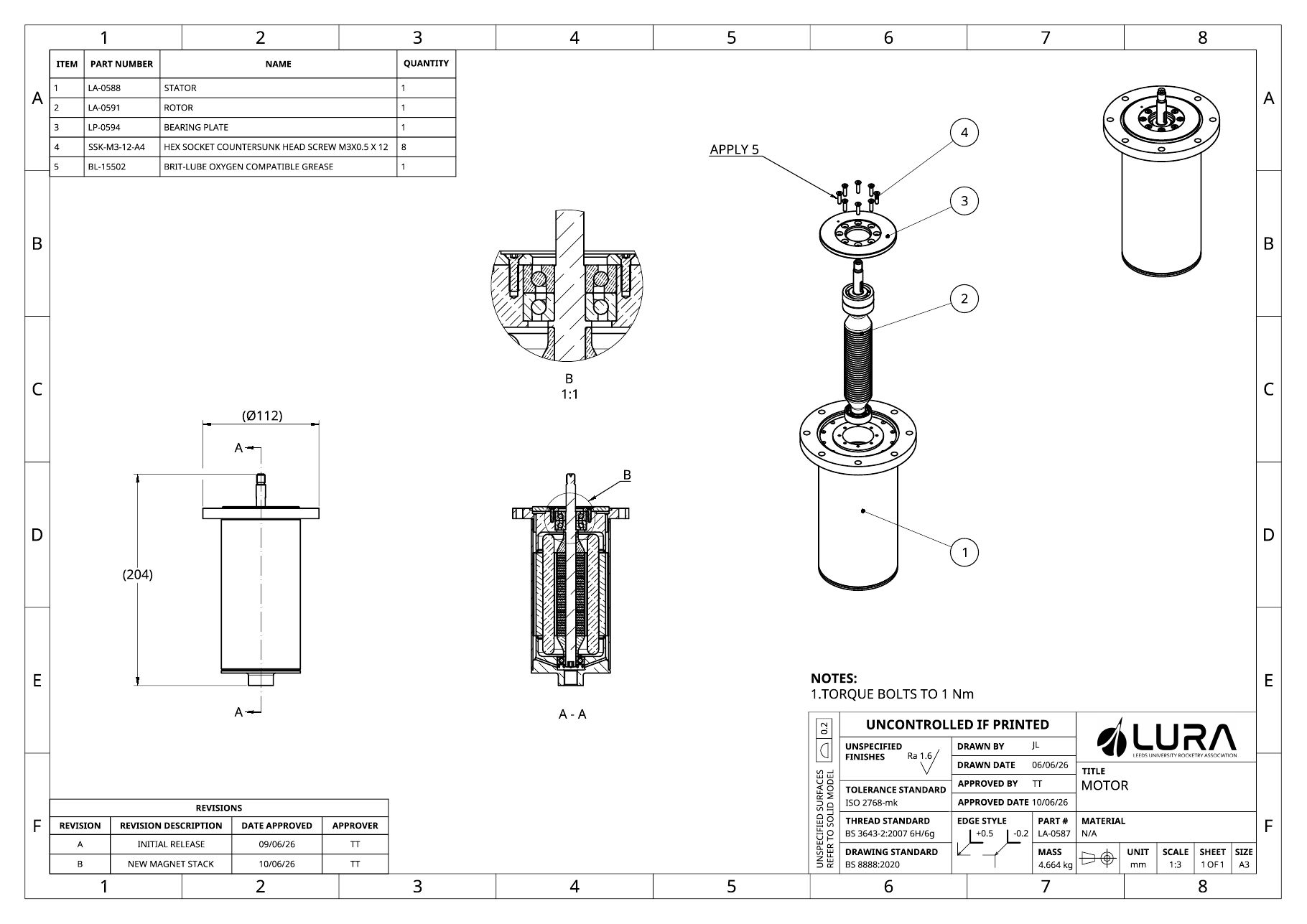
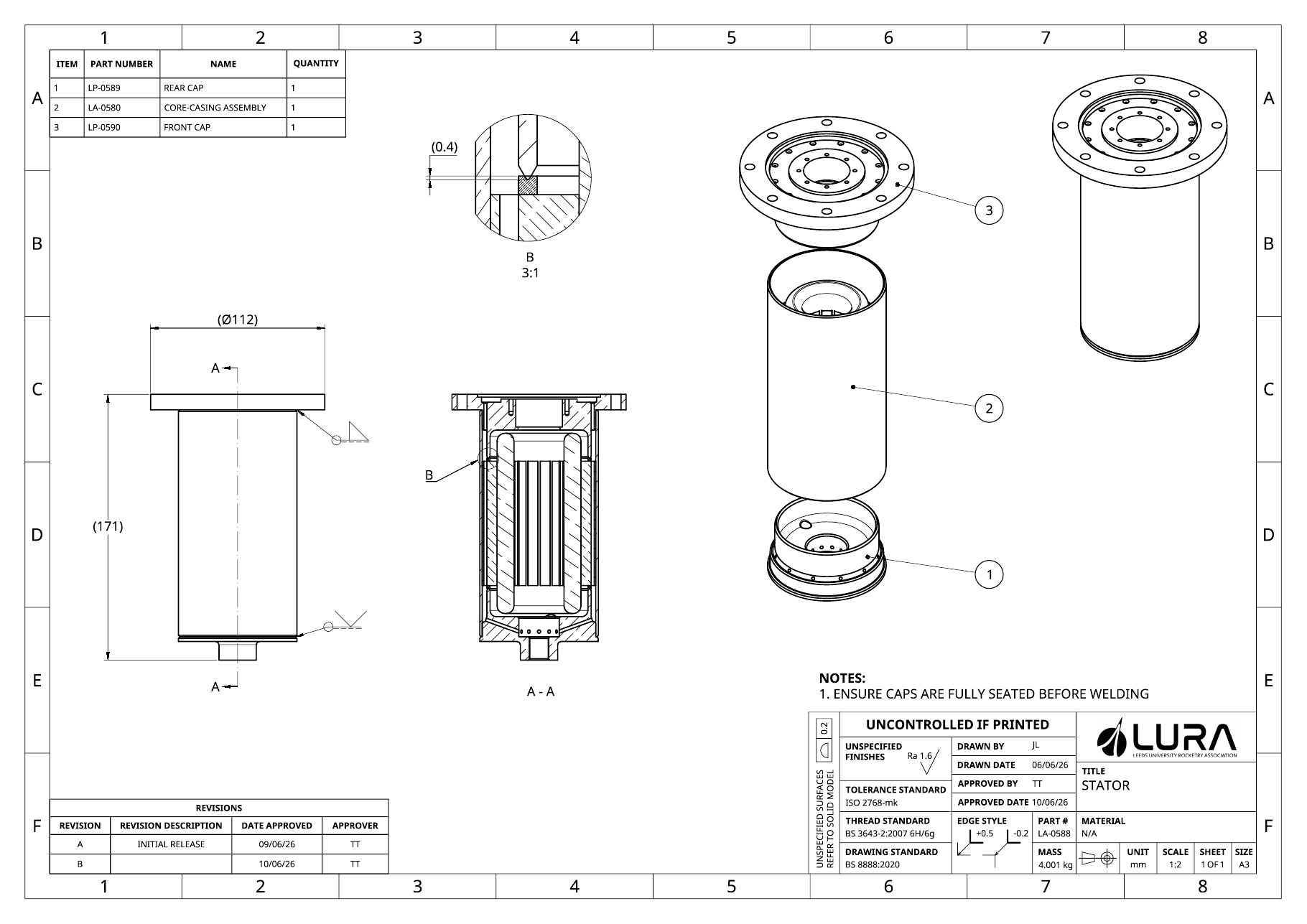
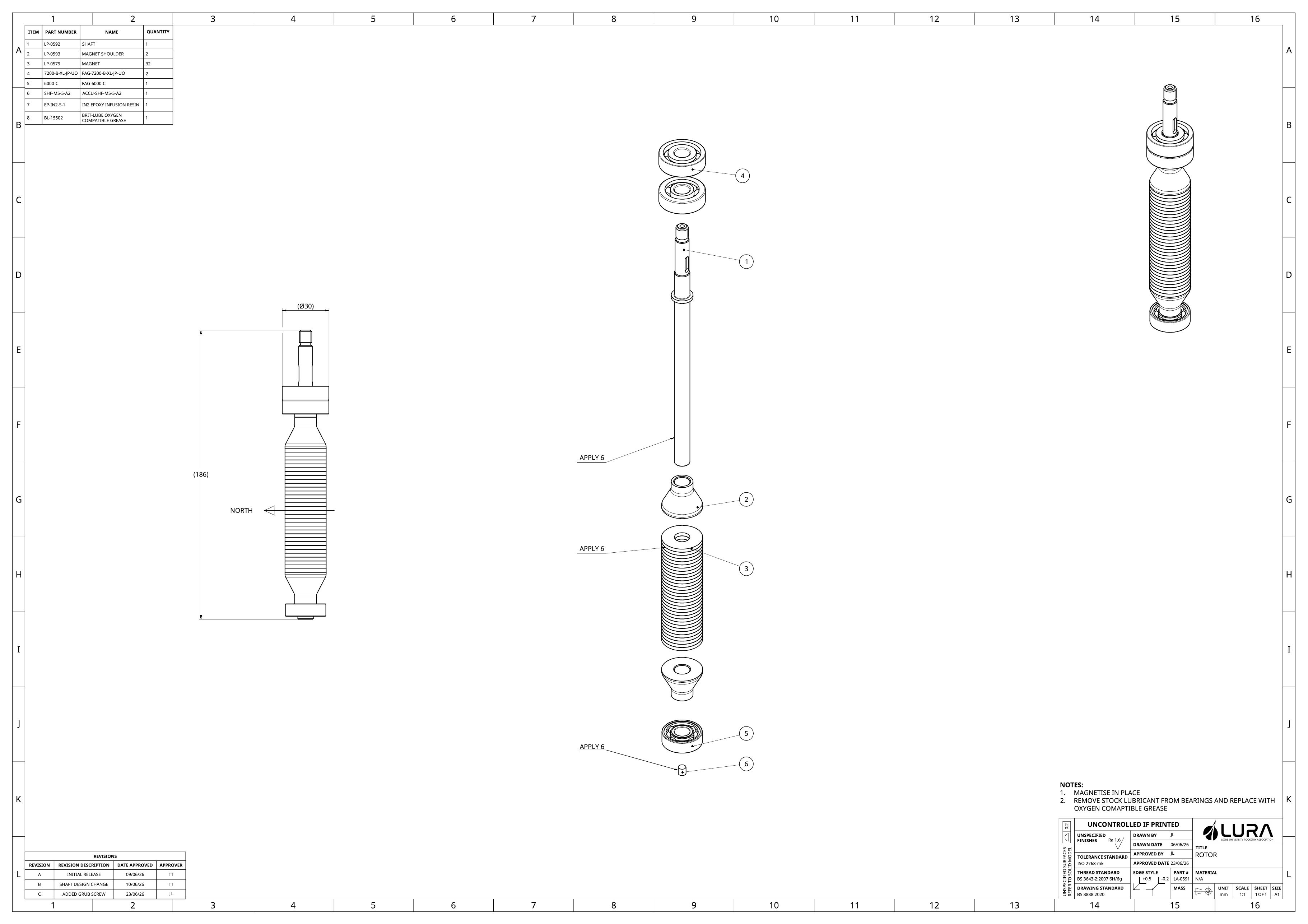
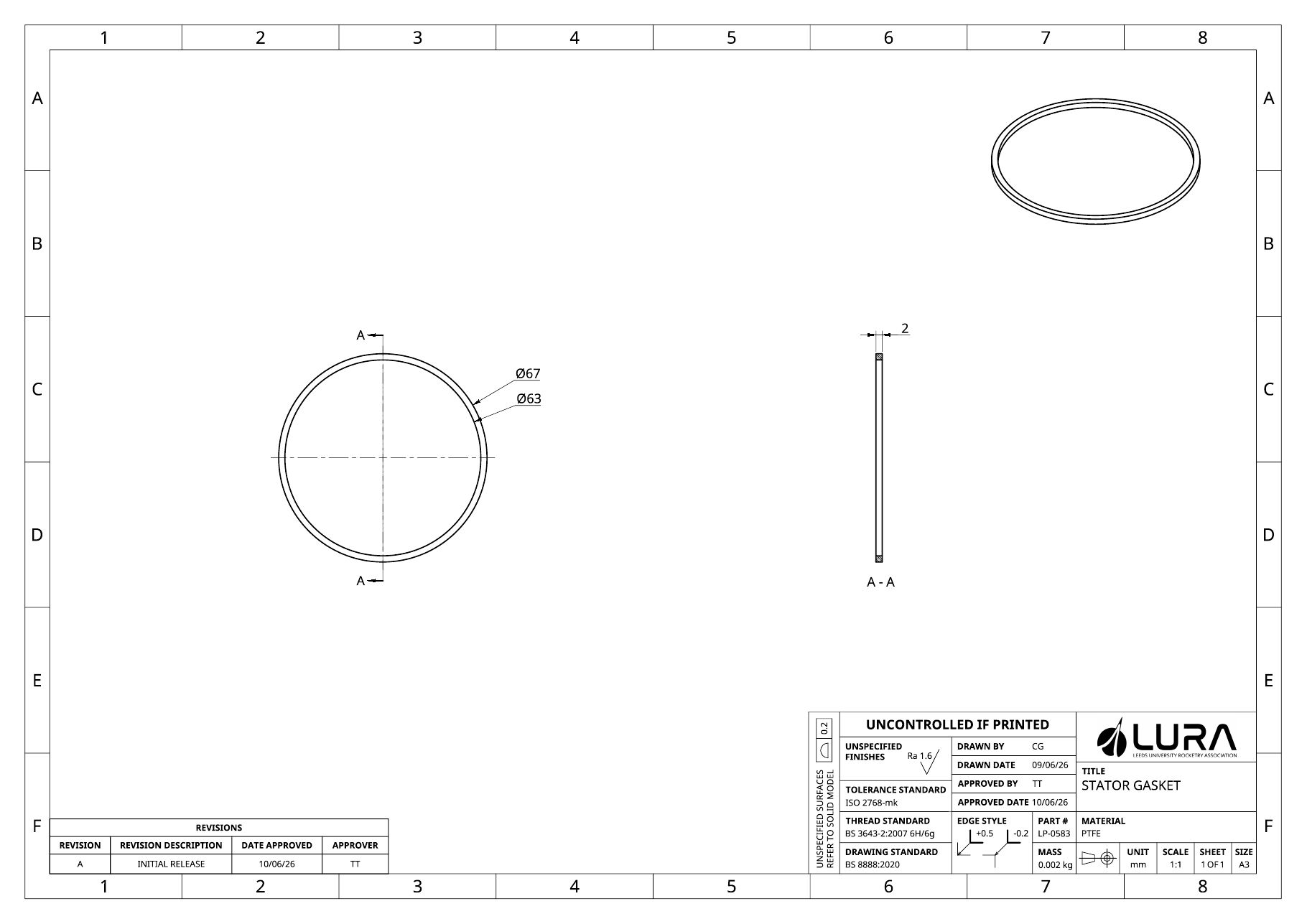
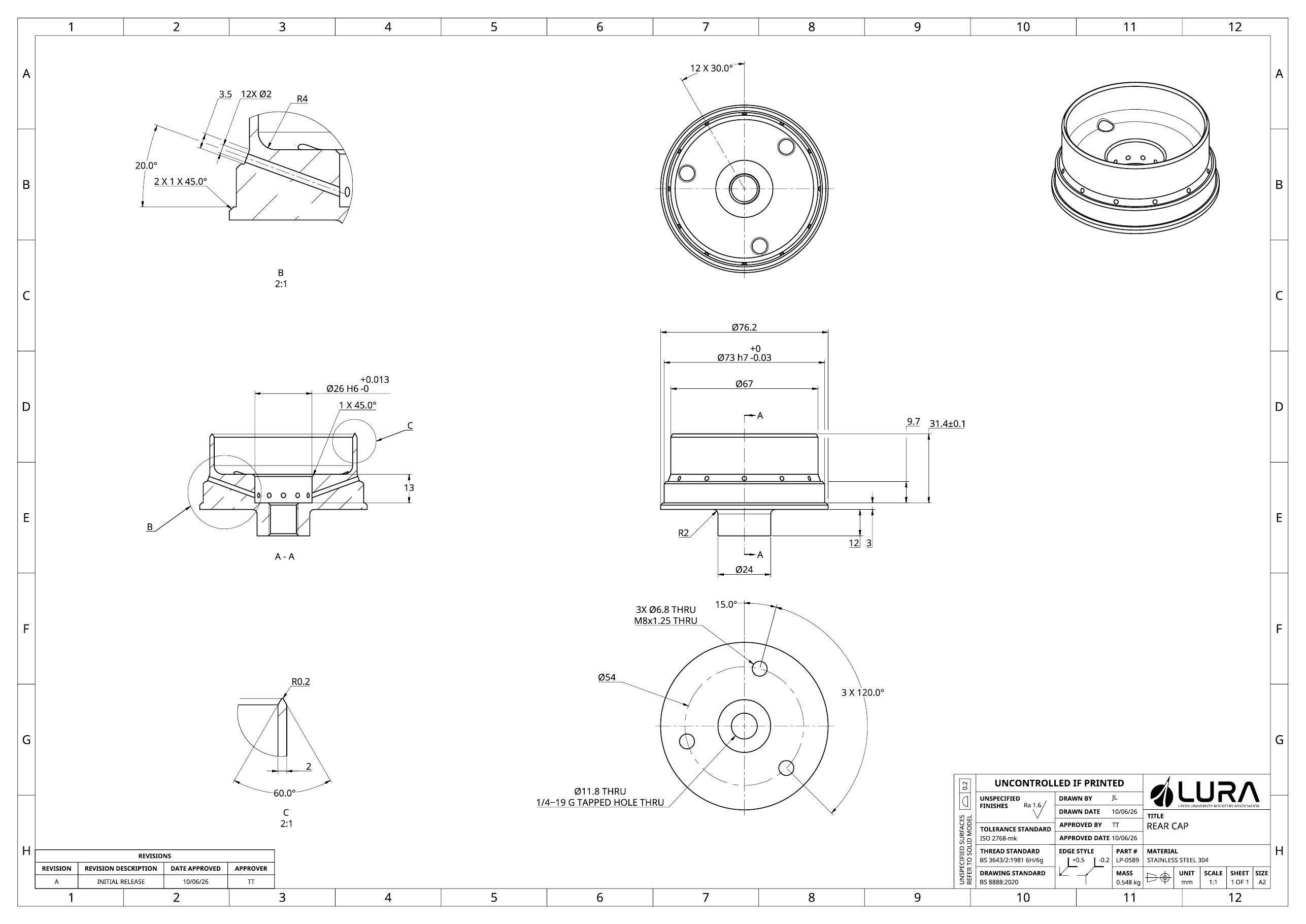
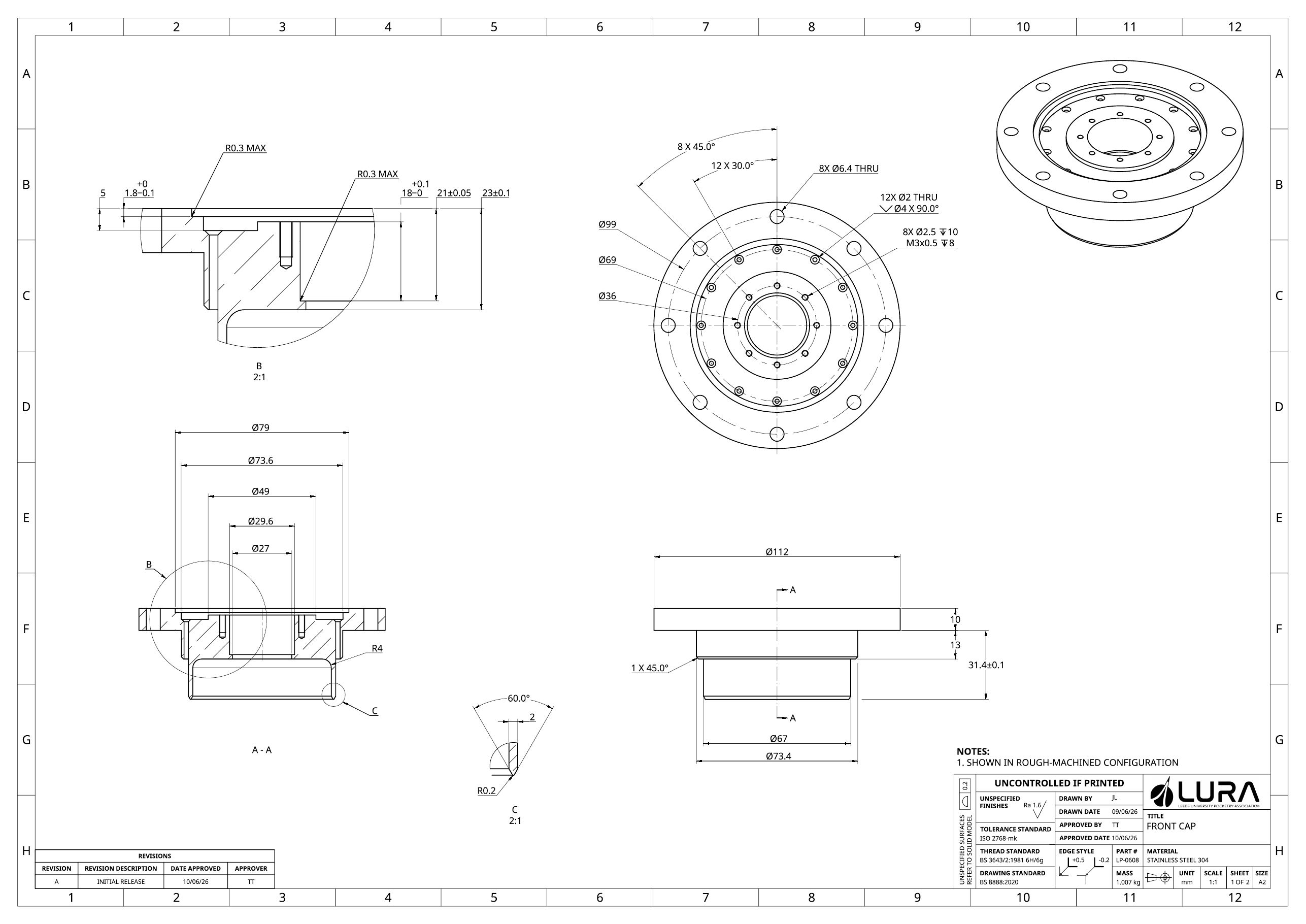
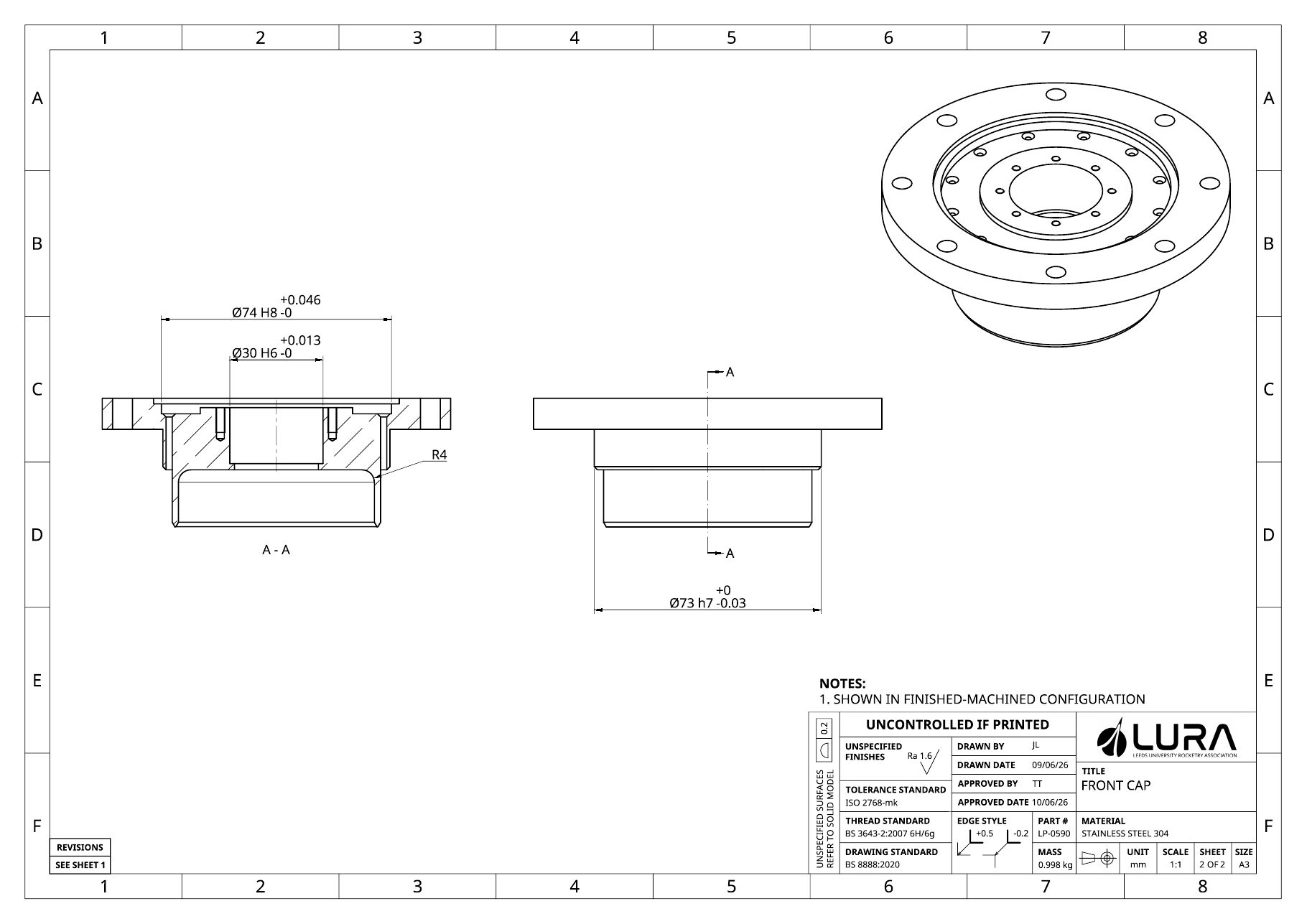
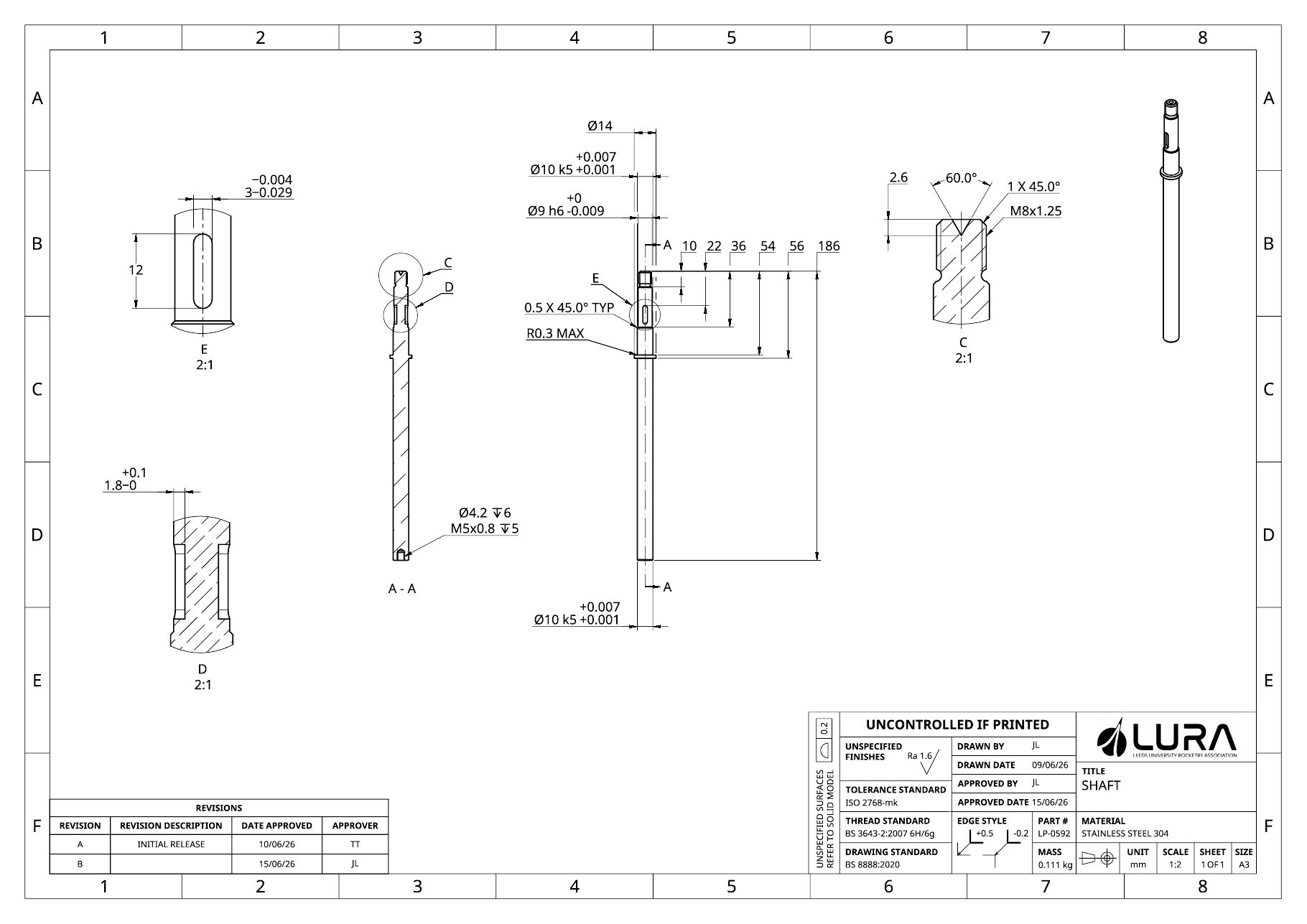
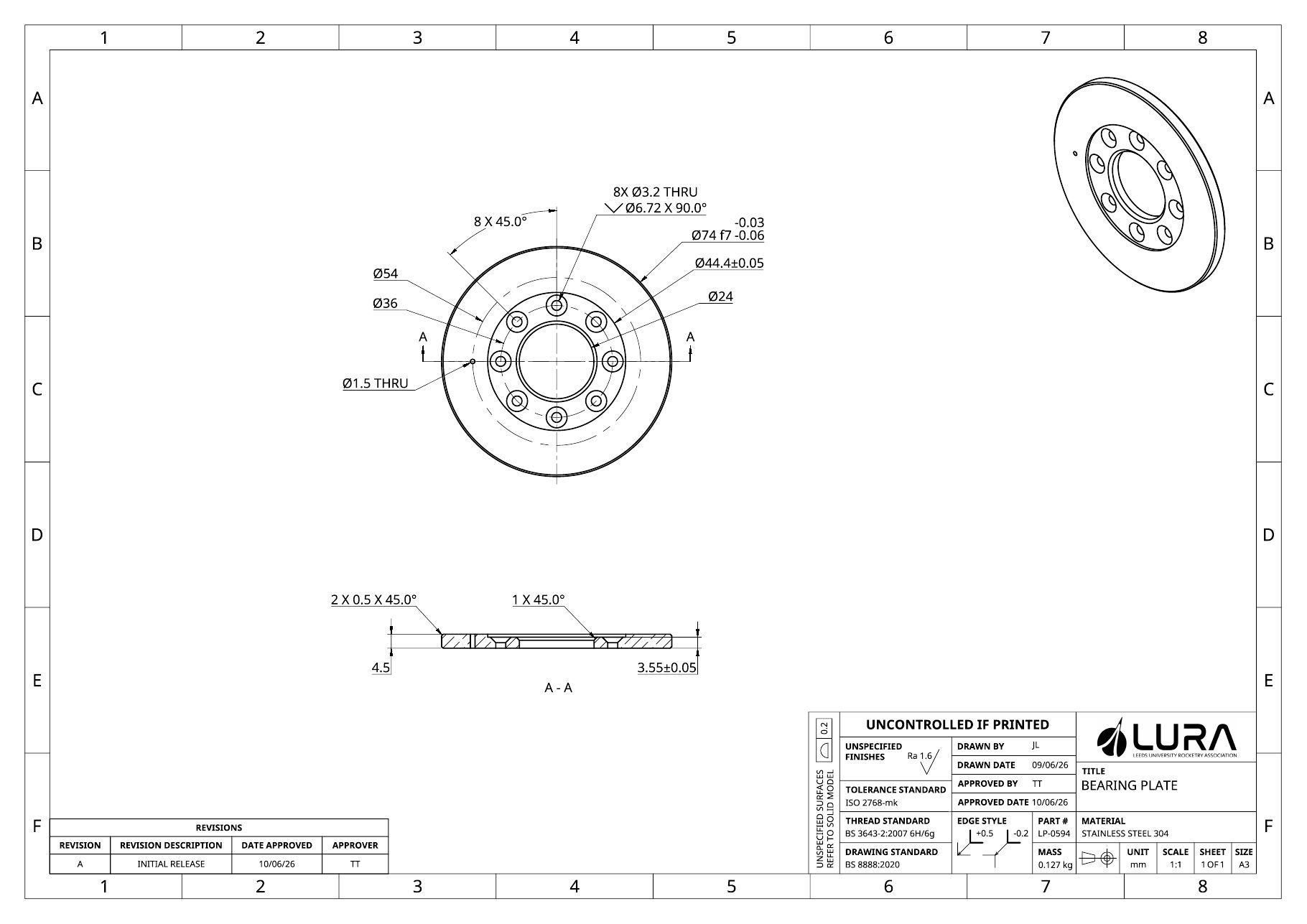
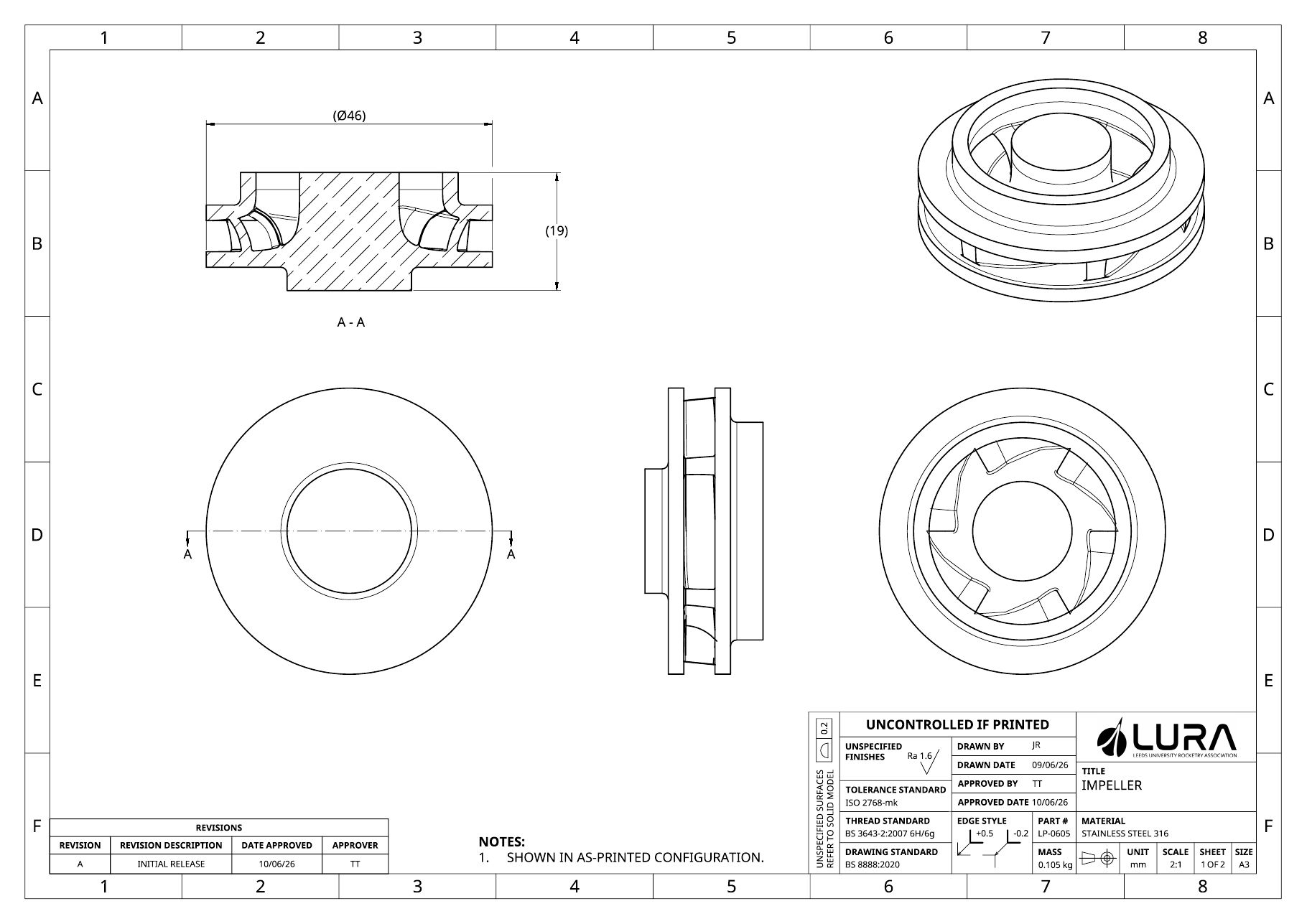
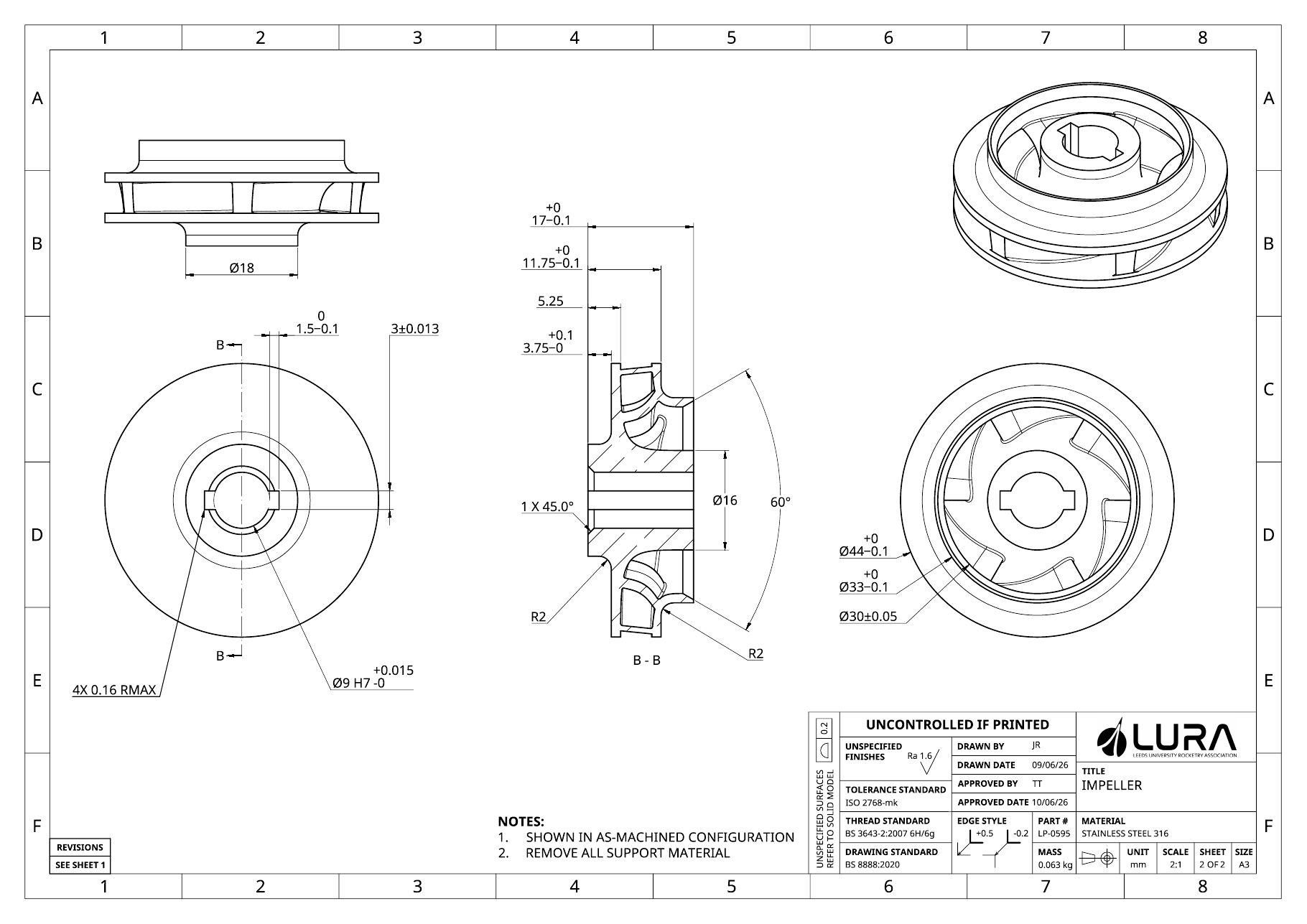
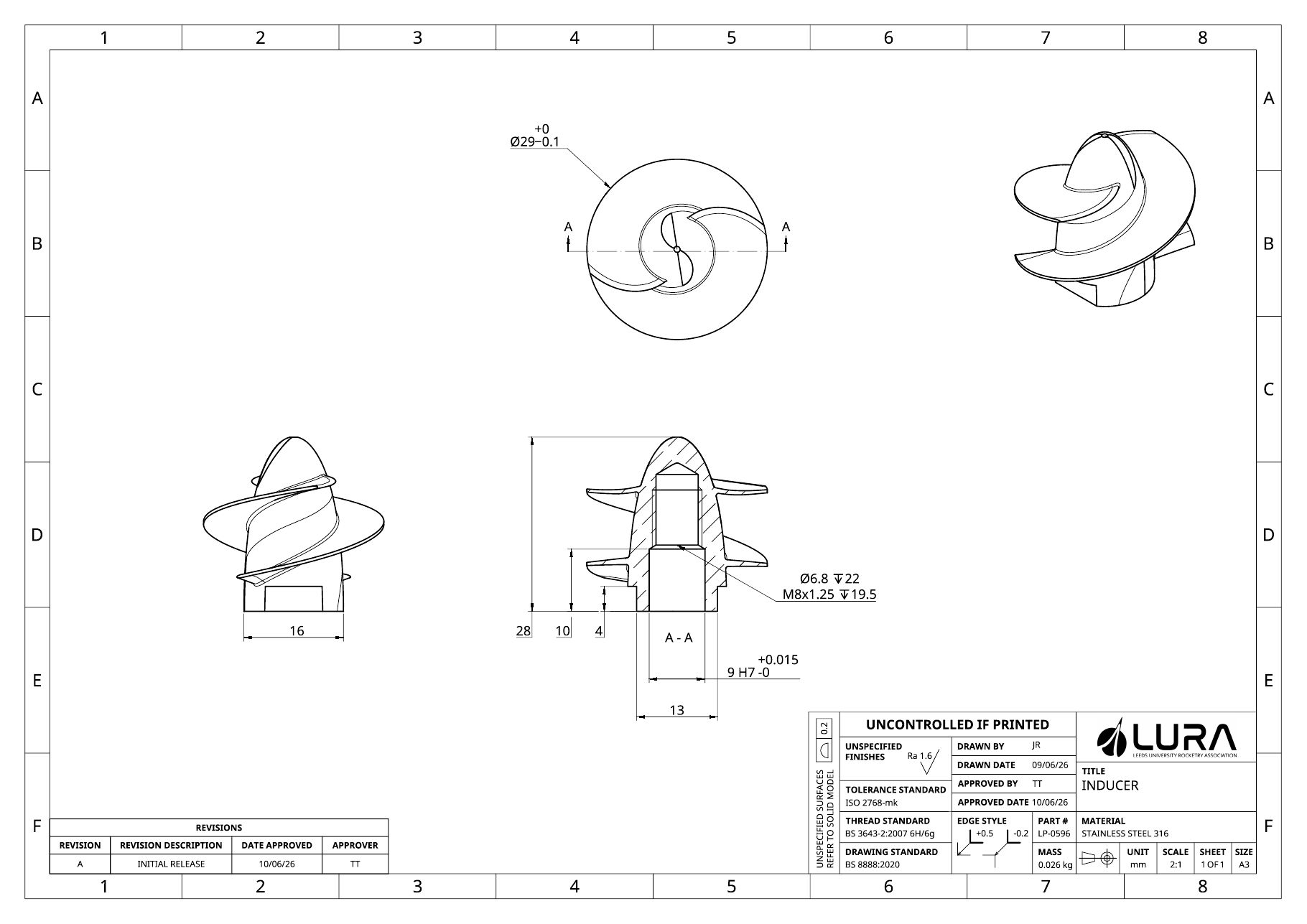
Of course, I also developed hard skills - largely lathe work, mechanical design, and the associated drawings and tolerancing. 40,000rpm, 45Bar, 244A, 110K. A small, complex design that ended up being rather elegant. See the drawing pack below.